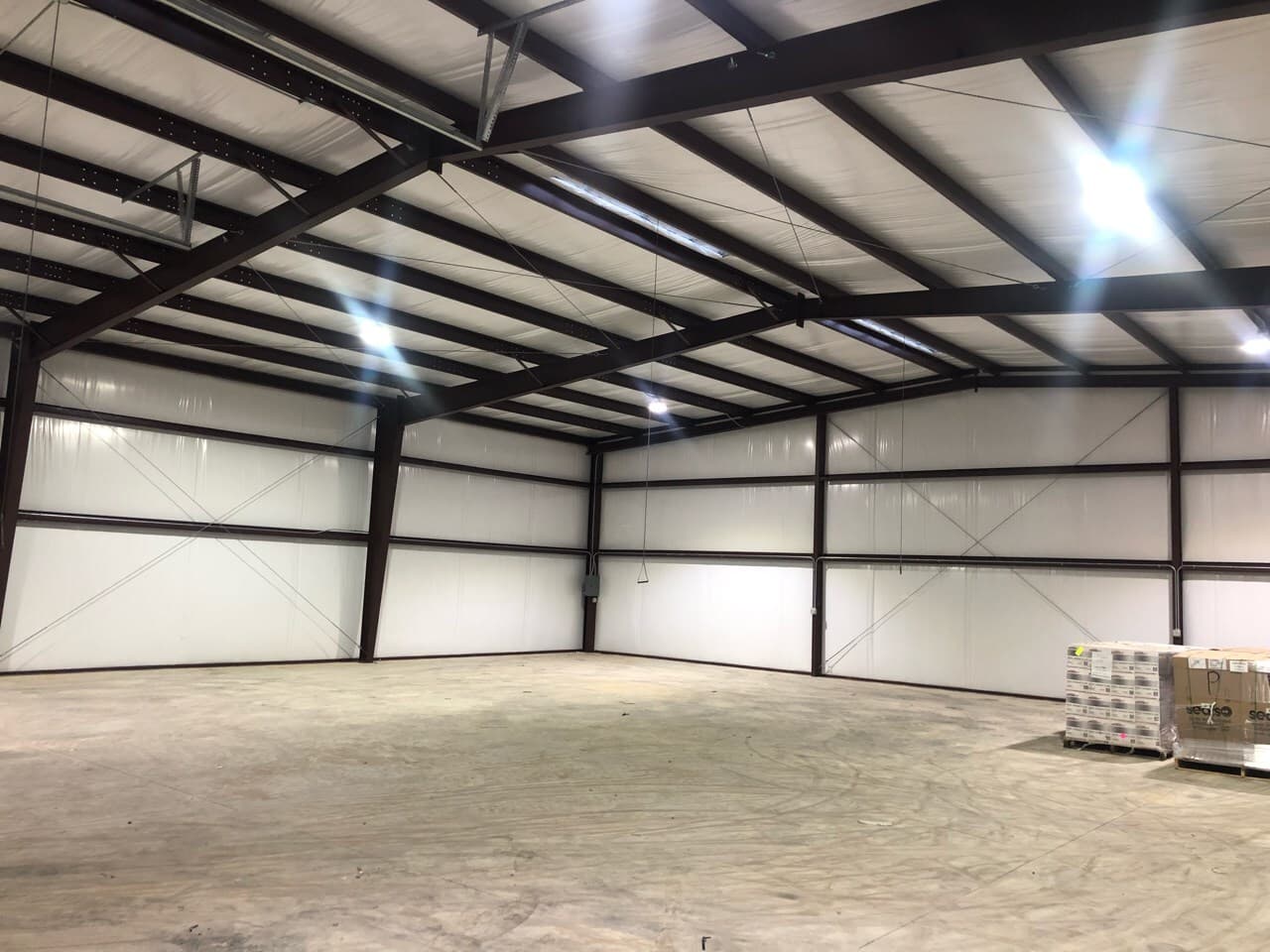
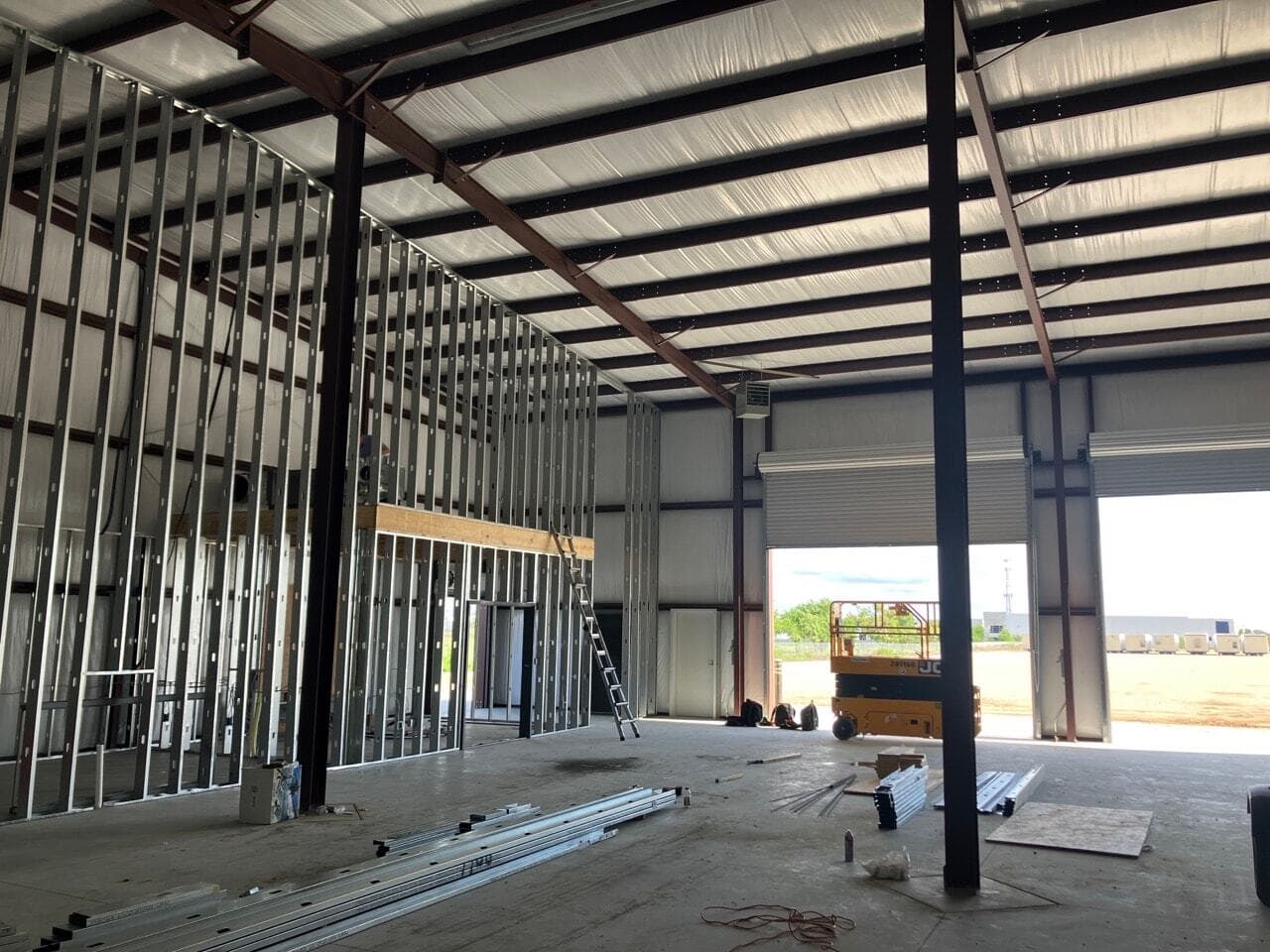
White box construction is the finish level between a bare shell and a completed tenant space: a commercial space delivered with framed, taped, and painted walls, a suspended ceiling grid, basic lighting, distributed HVAC, a code-compliant restroom, and a smooth sealed floor — but no tenant-specific finishes, fixtures, or equipment. In Texas in 2026, white box work typically costs $30 to $70 per square foot, and takes six to twelve weeks depending on the size of the space and the condition it started in.
The point of a white box is speed and neutrality. A landlord who delivers white box can hand a prospective tenant a clean, permitted, lit, conditioned space that any number of businesses could move into, rather than asking them to imagine a retail store inside a concrete box with exposed joists and a dirt-streaked slab. For the tenant, a white box removes the slowest and least differentiating part of a build-out and leaves only the work that actually reflects their brand.
What Exactly Is Included in a White Box Delivery?
There is no legal definition of "white box," which is precisely why the term causes so many disputes. What it means in practice is whatever the lease says it means, and the number of square-foot deals that go sideways because the landlord and tenant had different pictures in their heads is remarkable. A reasonably standard Texas white box delivery includes:
- Demising walls framed, insulated, drywalled, taped, floated, and painted a neutral color, full height to the deck where code or the lease requires it
- Suspended acoustic ceiling grid and tile at a uniform height, or a cleaned and painted exposed structure where that is the agreed look
- Building-standard lighting installed and functional, typically LED troffers or strips at a code-minimum footcandle level
- HVAC equipment set and distributed — rooftop unit or split system sized to the space, with main trunk duct and a basic diffuser layout, controls, and a thermostat
- Electrical service to a panel inside the space, with capacity stated in amps, plus a distributed convenience outlet layout
- At least one ADA-compliant restroom, complete with fixtures, finishes, exhaust, and grab bars
- A sealed, level concrete floor free of adhesive, trenching scars, and elevation problems
- Code-required life safety — exit doors and hardware, exit and emergency lighting, fire extinguishers, and sprinkler heads distributed on a standard grid if the building is sprinklered
What a white box does not include: flooring beyond the sealed slab, interior partition walls beyond the demising walls, millwork, plumbing beyond the restroom, specialty electrical, data and low-voltage cabling, storefront modifications, signage, and anything at all that identifies the tenant. Those items are the tenant improvement, and they are a separate scope with a separate budget. Our tenant improvement guide for Tyler and Canton covers how that second phase is scoped, priced, and negotiated.
How Is White Box Different From Gray Shell and Vanilla Box?
Three terms get used loosely and they describe genuinely different levels of completion. Getting them straight before you sign a lease is worth more than any negotiating tactic.
- Cold dark shell / gray shell: the structure only. Slab, structural frame, exterior envelope, roof, and stubbed utilities at the perimeter. No interior framing, no ceiling, no HVAC inside the space, no lighting, no restroom. This is what a new multi-tenant building is typically delivered as before any tenant signs. Finishing a gray shell to a usable condition in Texas commonly runs $60 to $130 per square foot depending on use.
- White box: the shell plus everything in the list above. Neutral, conditioned, lit, permitted for a general occupancy, and legally usable — just not specific to anyone.
- Vanilla box / vanilla shell: in most Texas markets this is used interchangeably with white box, though some landlords mean a slightly lighter version — grid and lighting but no restroom, or drywall left unpainted. Because the usage varies by market and by broker, never rely on the label. Rely on an itemized delivery exhibit attached to the lease.
The practical advice is simple: whichever term appears in your letter of intent, attach a written scope exhibit listing every one of the items above as included or excluded, with the HVAC tonnage and the electrical service size stated as numbers. A one-page exhibit prevents a six-figure argument.
What Does White Box Construction Cost Per Square Foot in Texas?
For 2026, here is what we see across East Texas and the Dallas-Fort Worth metroplex:
- Gray shell to white box, new construction: $30 to $50 per square foot. Everything is new, access is clear, and there is nothing to demolish or discover.
- Second-generation space to white box: $40 to $70 per square foot. This includes demolition of the previous tenant's improvements, which is where the range widens — a space that held an office demolishes cheaply, a space that held a restaurant does not.
- Restaurant or medical space back to white box: $55 to $95 per square foot. Grease-laden ductwork, hood systems, floor sinks and trenched plumbing, walk-in coolers, medical gas, and lead-lined walls all have to come out and be made good, and some of it is regulated waste.
- Restroom addition where none exists: $18,000 to $45,000 for a single ADA-compliant restroom, driven almost entirely by how far the space is from an existing sanitary line and whether the slab has to be cut and trenched.
- HVAC where the space has none: $12 to $22 per square foot for equipment, curb, distribution, and controls.
East Texas markets — Tyler, Longview, Canton, Athens, Lindale — generally price 10 to 20 percent below equivalent Dallas-Fort Worth work, mostly on labor. That gap is real, but it is smaller on white box work than on ground-up construction, because a larger share of white box cost is materials and equipment that cost the same everywhere. If you are comparing a Tyler space against a DFW space purely on build-out cost, expect the difference to be meaningful but not dramatic. For the wider picture, see our breakdown of commercial construction cost per square foot in Texas.
Who Pays for the White Box — Landlord or Tenant?
Usually the landlord, and it is usually in the landlord's interest. A white box space leases faster and to a broader pool of tenants than a gray shell, and the cost is recovered in rent and in reduced vacancy. In a strong market a landlord may deliver white box as standard and offer no further allowance. In a softer market, or for a strong credit tenant on a long term, the landlord may deliver white box and provide a tenant improvement allowance on top.
The three structures you will see:
- Landlord delivers white box, tenant funds the fit-out. The most common arrangement. Clean division of responsibility, and the tenant controls the finishes that matter to them.
- Landlord delivers shell plus a TI allowance in dollars per square foot. The tenant does the white box work themselves out of the allowance. This gives the tenant control but consumes allowance dollars on work that adds nothing to their brand.
- Turnkey delivery. The landlord builds the whole thing, white box and fit-out, to an agreed plan, and the cost is amortized into rent. Simplest for the tenant, most expensive over the term.
Whichever applies, get the delivery condition and the delivery date in the lease, along with what happens if the date slips — because a tenant paying rent on a space that is not yet deliverable has almost no leverage after signing. Our guide to planning a commercial build-out in leased East Texas space works through the negotiation in detail.
How Long Does a White Box Build-Out Take?
Six to twelve weeks of construction for a typical 2,000 to 8,000 square foot space, plus permitting ahead of it. The realistic sequence:
- Design and permit: 3 to 8 weeks. Even a white box needs a stamped plan set in most Texas cities, and a plan review cycle. Smaller cities like Canton, Mineola, and Lindale move faster than Tyler or Longview.
- Demolition (second-generation space only): 1 to 3 weeks.
- Rough-in — framing, electrical, mechanical, plumbing: 2 to 4 weeks, with inspections between stages.
- Drywall, tape, float, paint: 2 to 3 weeks.
- Ceiling grid, lighting, diffusers, restroom finishes: 1 to 2 weeks.
- Final inspections and closeout: 1 to 2 weeks.
The long pole is almost never the construction. It is the rooftop HVAC unit, the electrical gear, or the plan review. Order equipment at design, not at rough-in.
What Goes Wrong With White Box Deliveries?
Four failures account for most of the disputes we are asked to resolve.
The undefined scope. A lease says "landlord shall deliver the premises in white box condition" and nothing more. The landlord's white box has no restroom; the tenant assumed one. Fix: the itemized exhibit.
Undersized service. The white box is delivered with a 100-amp panel and a 5-ton rooftop unit, which is fine for an office and hopelessly inadequate for the restaurant or salon that signs the lease. Upgrading service after the fact costs multiples of what it would have cost during the white box. Fix: state the amperage and the tonnage in the exhibit and match them to the likely use.
The floor. A slab that looks fine under a previous tenant's carpet turns out to be trenched, patched at three elevations, or coated with adhesive that has to be ground off. Floor leveling and prep can add $4 to $12 per square foot and it is invisible until the carpet comes up. Fix: pull a corner of the flooring before you sign.
The change of use. A white box permitted as general retail does not automatically permit a restaurant. Occupancy classification changes can trigger added exits, upgraded ventilation, grease interceptors, and accessibility work — and they can invalidate the assumption that the space is "ready." A new certificate of occupancy is nearly always required for a new tenant regardless; our guide to getting a certificate of occupancy in Texas covers what triggers what.
How Does White Box Fit East Texas Retail Development?
In East Texas, white box delivery is most common in new multi-tenant retail — the strip centers going up along Loop 323 in Tyler, the US-69 business corridor through Lindale, and Loop 281 in Longview. A developer builds the shell, white-boxes the bays as leases approach, and fits out each tenant individually. It is the most capital-efficient way to build multi-tenant retail, because the expensive tenant-specific work only happens against a signed lease. Our analysis of strip center construction costs in Texas breaks the shell, white box, and fit-out phases into separate line items.
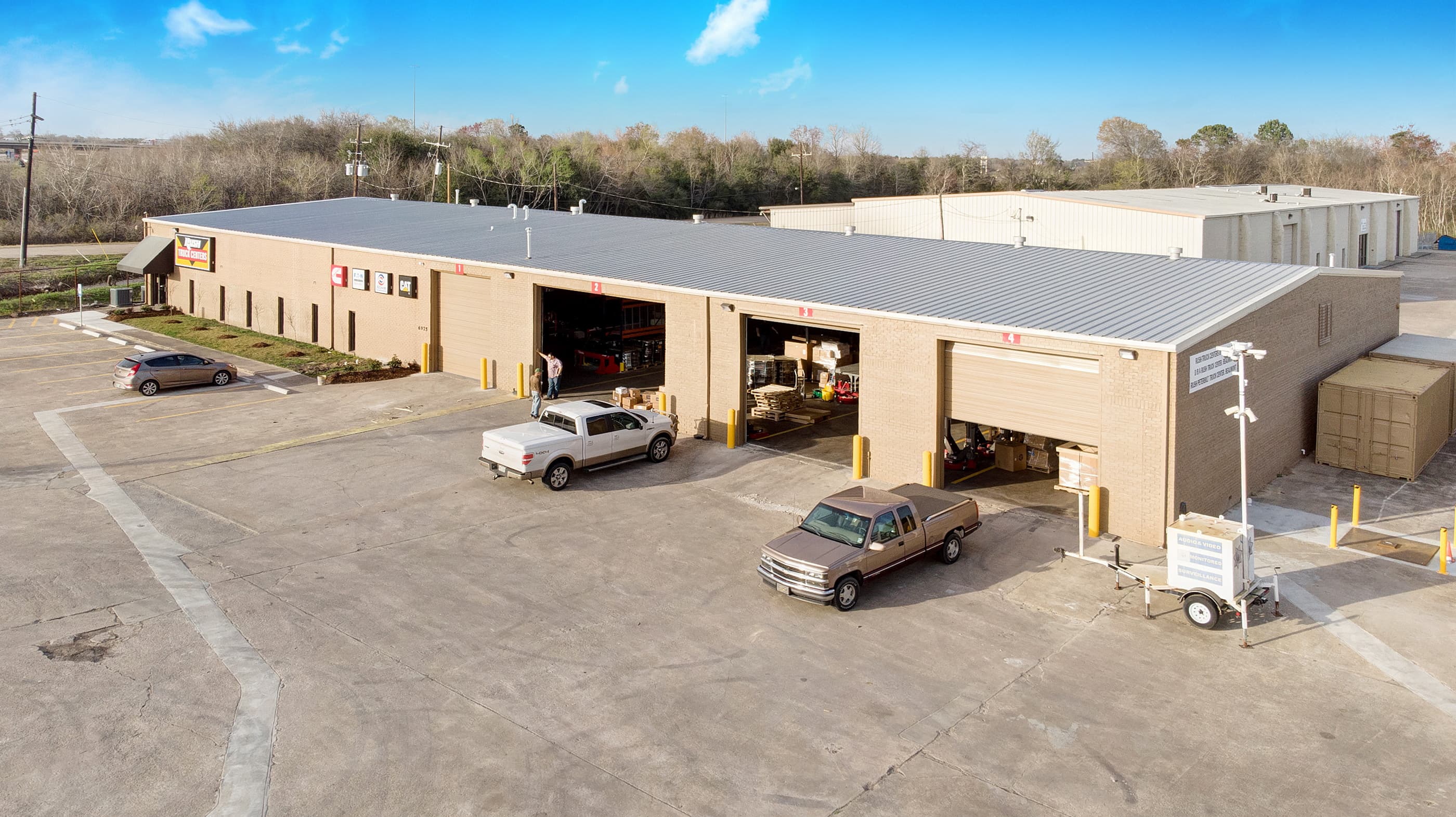
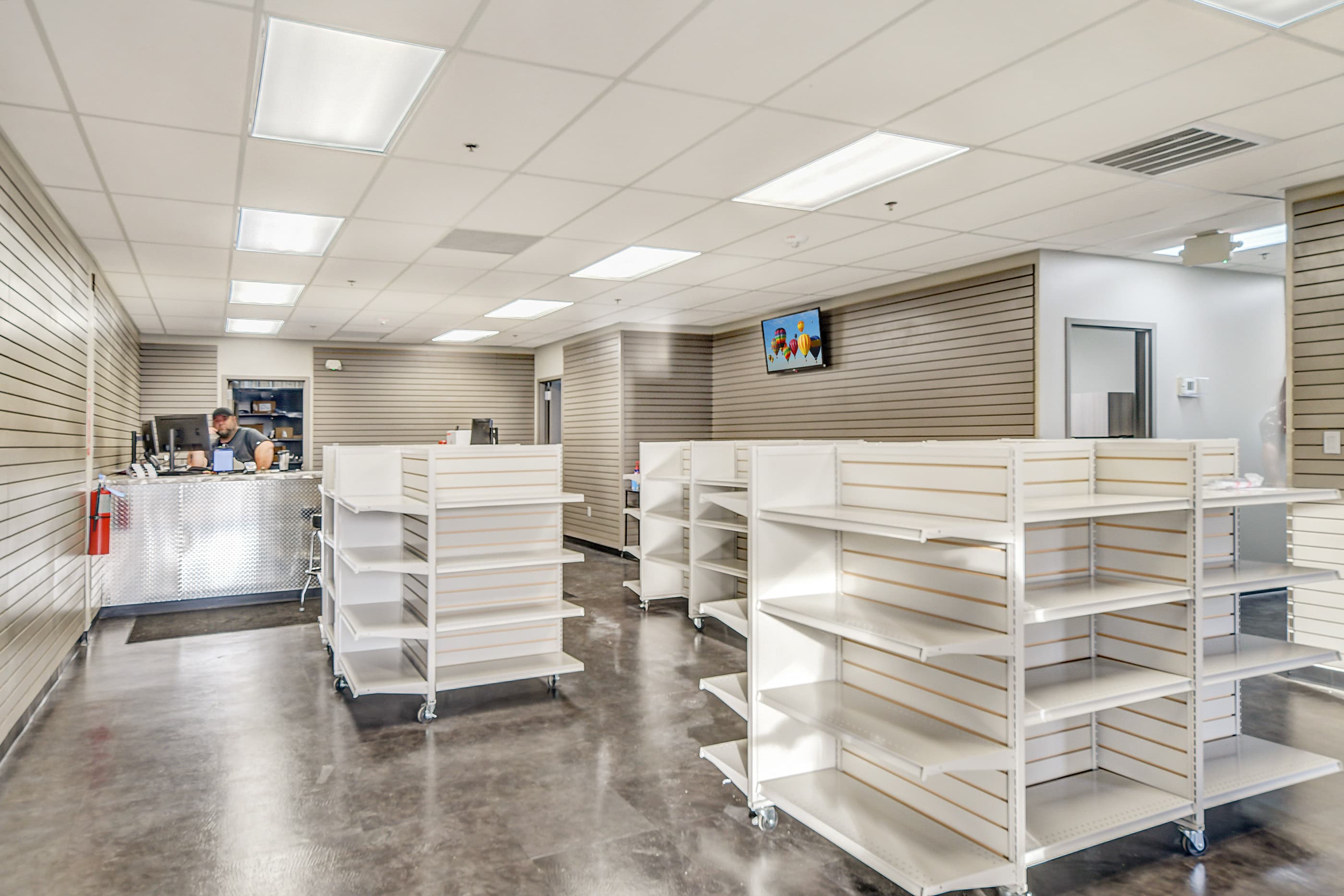
SYB Builders works all three phases. We build shells, we white-box bays, and we do the tenant fit-outs — including large-format ones like the 18,000 square foot Rush Truck Center Laredo West tenant improvement, where we took a shell to a finished operation with service bays, offices, a retail showroom, HVAC, and a full sprinkler system. Owning all three phases means the interfaces between them — the ones that produce finger-pointing when three different contractors are involved — are simply ours.
Get a Real Number on Your White Box
Whether you are a landlord deciding how far to finish a space before marketing it, or a tenant trying to work out what you are actually being handed, the answer starts with a walk-through and an itemized scope. SYB Builders builds white box and tenant improvement work across Tyler, Canton, Longview, Lindale, Athens, and the Dallas-Fort Worth metroplex, and we will tell you plainly which items belong on the landlord's side of the line and which belong on yours. See our tenant improvement services, request a free estimate, or call 903-560-8330 and we will walk the space with you.