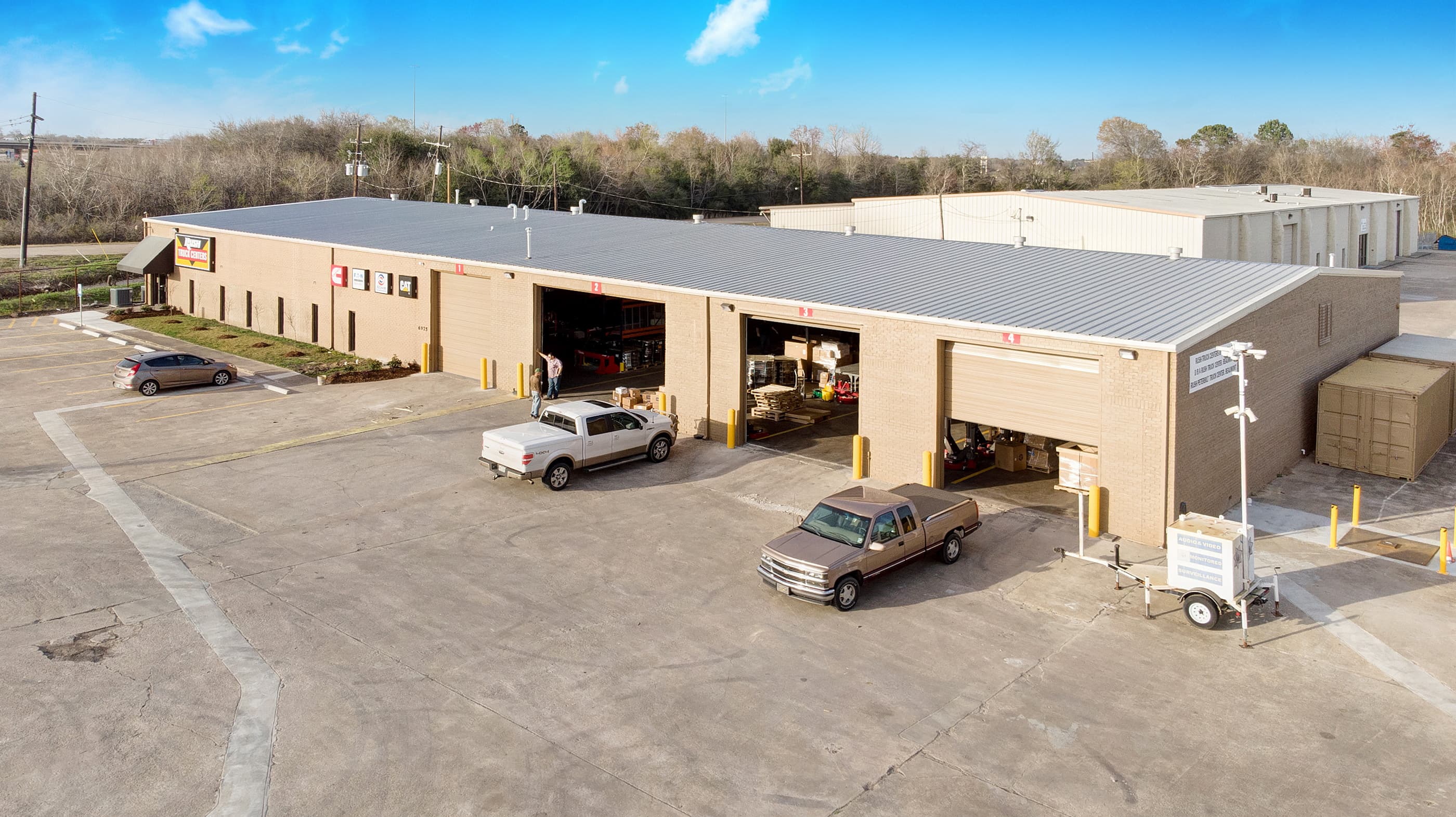
Choose design-build when your schedule is compressed, your budget is firm, or your existing conditions are unknown — one firm holds both the design and the construction, prices the building continuously as it is drawn, and there is no bid period and no redesign cycle. Choose traditional general contracting when you already hold a complete, permitted drawing set and want competitive bids against a fixed document. In East Texas, design-build typically saves 15 to 30 percent of total project duration; design-bid-build typically produces a lower construction contract when the drawings are genuinely finished and the market is competitive.
That is the short answer. The rest of this guide is the reasoning behind it, and the specific ways this decision plays out differently in Tyler, Longview, Canton, and the rest of East Texas than it would in a large metropolitan bidding market. If you want a primer on the delivery method itself before comparing, start with what design-build commercial construction is, and its pros and cons.
What Is the Actual Difference Between Design-Build and General Contracting?
The difference is contractual, and everything else follows from it.
Under traditional general contracting — properly called design-bid-build — you hold two separate contracts. First you engage an architect, who develops the design through schematic, design development, and construction documents, coordinating structural, civil, and MEP engineers along the way. When the documents are complete, you take them to market. Contractors bid the same set, you select one, and that contractor builds exactly what is drawn. Anything not drawn is a change order.
Under design-build, you hold one contract. The design-builder engages the architect and engineers, and is responsible to you for both the design and the construction of the finished building. Because the builder is present while the design is being made, the drawings and the budget develop together instead of meeting for the first time at bid day.
The consequence that matters: under design-bid-build, if the finished drawings come in over budget, that is your problem. You paid for the design, the design does not fit the money, and you now pay for a redesign and lose months. Under design-build, that scenario cannot occur in the same way, because the price was tracked the whole time.
Which Delivery Method Costs Less in East Texas?
On the construction contract alone, design-bid-build often wins — three or four contractors bidding the identical set will sharpen a number in a way a negotiated contract does not. On total project cost, design-build usually wins. The difference between those two statements is where most owners get this decision wrong.
Total project cost includes things the construction contract does not:
- Redesign. When a bid set comes in 20 to 40 percent over budget — which happens often enough that every architect has a story — you pay architectural fees a second time to value-engineer the design down. On a $2 million project that is commonly $30,000 to $70,000 and two to four months.
- Change orders. Design-bid-build shifts every drawing error, coordination clash, and unbuildable detail into a change order, because the contractor priced exactly what was drawn. Design-build projects generally carry materially fewer of them, because the builder reviewed the details before they were issued. Our guide to change orders and how to avoid them covers the mechanics.
- Carrying cost. Every month of extra schedule is a month of interest on the construction loan, a month of rent on the space you are leaving, or a month of revenue you are not earning in the new building. On a $2 million project this is easily $15,000 to $30,000 a month all-in.
- Contingency. A well-run design-build project can often carry a lower contingency because the scope is better understood earlier. See how much contingency a commercial construction budget should have for the ranges.
Add those up and the low bid frequently stops being the low number. Where design-bid-build genuinely wins on total cost is on straightforward, fully documented buildings in a competitive market — a warehouse shell, a standard retail building, a simple office — where there is little to discover and little to coordinate.
Which One Is Faster?
Design-build, clearly and consistently. Two mechanisms produce the gap.
First, overlap. Under design-bid-build the phases are strictly sequential: complete the design, then bid it, then build it. Under design-build, construction packages release as they are ready. Site work and foundations can start while interior finishes are still being selected, and long-lead equipment — rooftop units, electrical gear, pre-engineered building packages — can be ordered months earlier because the builder knows what is coming.
Second, no bid period. Competitive bidding on a commercial project is typically four to six weeks from issue to award, plus scope review and negotiation. Design-build eliminates that entirely.
Across a typical East Texas commercial project, the total saving runs 15 to 30 percent of duration — two to four months on a ground-up building that would otherwise take twelve to sixteen months from design start to certificate of occupancy. If you are working against a lease expiration, a school year, a seasonal opening, or a construction loan with a hard maturity, that difference is often the entire decision. Our project-by-project guide to commercial construction timelines in Texas sets out the baselines.
When Should an East Texas Owner Choose Design-Build?
Design-build is the right call in five situations:
- The schedule is the binding constraint. A firm opening date, a lease running out, or a loan maturing.
- The budget cannot move. If your financing is capped and a 25 percent overage kills the project, you cannot afford to find out how much it costs after the drawings are done.
- Existing conditions are unknown. Renovations, adaptive reuse, change-of-use conversions, and any older building where what is behind the walls is a genuine question. A builder in the room during design can open a ceiling and answer it in a week.
- The program is still forming. If you know you need roughly 15,000 square feet of shop and office but the exact mix is still being worked out, design-build lets the program and the budget resolve together.
- You do not want to referee. Under design-bid-build, when something goes wrong the architect and the contractor each have a defensible account of whose fault it is, and you are the one adjudicating. Design-build removes that seam.
When Is Traditional General Contracting the Better Call?
We turn down design-build work regularly, because it is genuinely the wrong tool in these cases:
- You already hold complete, permitted construction documents. The design is paid for and done. Take it to bid. Paying a design-builder to re-enter a finished process adds cost and nothing else.
- The building is simple and fully specified. A straightforward pre-engineered metal warehouse with a known program has little for a builder to add during design and a great deal to gain from competitive bidding.
- Your procurement rules require it. Public entities, some institutional owners, and many grant-funded projects are legally obliged to competitively bid a defined scope. That decision has been made for you.
- You have strong internal construction capability. If you employ people who can manage an architect and a contractor separately and adjudicate between them, you can capture the bid savings and manage the risk yourself.
How Does Construction Management at Risk Fit In?
There is a third option that gets overlooked. Under construction management at risk, you hold a contract with the architect as you would under design-bid-build, but you also bring the construction manager on early — during design — to advise on constructability, budget, and schedule. The CM then converts to a guaranteed maximum price and builds the job.
It captures much of design-build's early-builder-input advantage while keeping the architect under your direct control, which some owners strongly prefer, particularly on architecturally driven buildings where the design intent is the point. The trade-off is that you are back to two contracts and two parties, so the accountability seam returns. In East Texas, CM at risk is most common on institutional work — schools, churches, healthcare — and less common on the mid-size commercial projects that make up most of this market.
What Does the East Texas Bidding Market Do to This Decision?
This is the part that generic national advice gets wrong. The case for design-bid-build rests on competitive tension: several qualified contractors bidding the same documents. That assumption holds in Dallas-Fort Worth. It holds much less reliably in Tyler, Longview, Athens, or Mineola.
On a $500,000 to $3 million commercial project in East Texas, it is common to issue a bid set and receive two responses, sometimes one. The large regional contractors are chasing bigger work; the small builders are not licensed, insured, or staffed for it. When you competitively bid into a thin market you do not get competitive tension — you get a delay, and then a number from whoever felt like bidding, with no benchmark to judge it against.
Three implications for owners here:
- If your project is under roughly $1 million, verify that a real bid pool exists before committing to a design-bid-build path. Ask your architect who they expect to bid.
- Subcontractor depth is thinner than in the metroplex for specialty trades — fire protection, controls, specialty mechanical. A design-builder who already holds those relationships can lock in capacity early; a bid set issued cold cannot.
- Local permitting knowledge is worth more here than in a big city, precisely because each jurisdiction is different and none of them are large enough to have exhaustively documented processes. Tyler, Longview, Lindale, Mineola, and Smith, Gregg, Wood, and Van Zandt counties all handle things their own way. Our city-by-city East Texas permit guide covers what to expect.
How Do You Decide?
Work through these in order. The first clear answer usually settles it.
- Do you already have complete permitted drawings? Yes → general contracting. Stop here.
- Are you legally required to competitively bid? Yes → general contracting. Stop here.
- Is there a hard date you cannot miss? Yes → design-build.
- Is the budget a hard ceiling with no room for a redesign? Yes → design-build.
- Is this a renovation or an older building with unknown conditions? Yes → design-build.
- Is the project a simple, fully defined building in a market with three or more willing bidders? Yes → general contracting.
- Still unsure? Run a preconstruction phase first. It is a small, defined engagement that produces a real budget and schedule, and it leaves both paths open. Our guide to what happens during preconstruction explains exactly what you get for it.
How SYB Builders Works Either Way
We deliver both. Our design-build service runs preconstruction, design coordination, guaranteed maximum price, and construction under one contract with one project manager and one superintendent from concept to certificate of occupancy. We also bid and build hard-bid work from a completed set, and we run construction management for owners who want the architect kept separate.
The built record is the same either way: ground-up service buildings like the 12,000 square foot Satellite Shelters build, multi-phase programs across a 15-acre dealership property, and tenant improvements from a few thousand square feet up. We work throughout East Texas and the metroplex, including Tyler, Canton, Longview, Lindale, Athens, and Terrell.
Talk It Through Before You Commit
The delivery method decision is made once and governs everything after it, and it is much cheaper to get right at the start than to correct at month six. Tell us what you are building, when it has to open, and what the budget actually is, and we will tell you honestly which method fits — including when that method is competitive bidding and not us. Request a free estimate or call 903-560-8330.