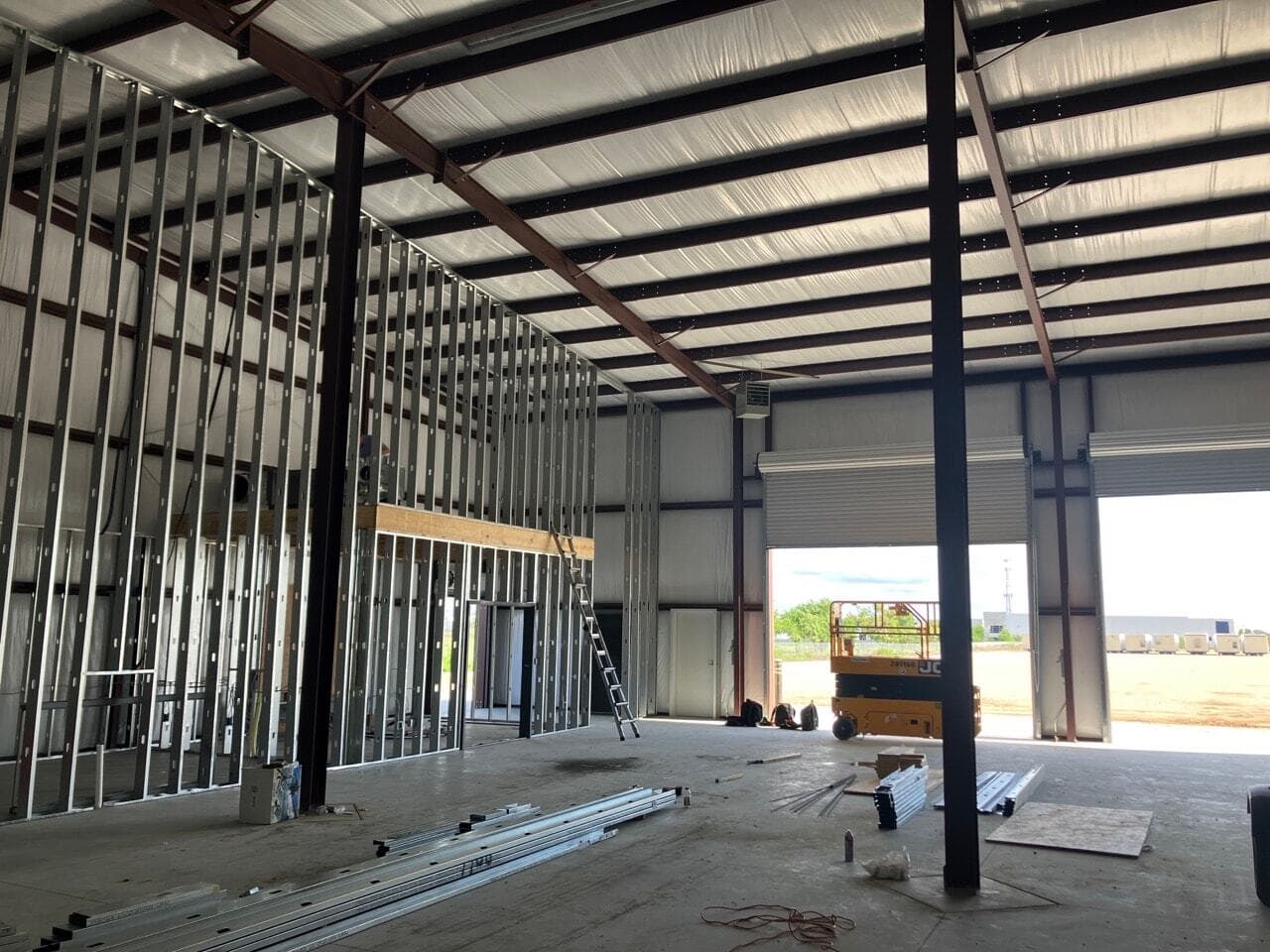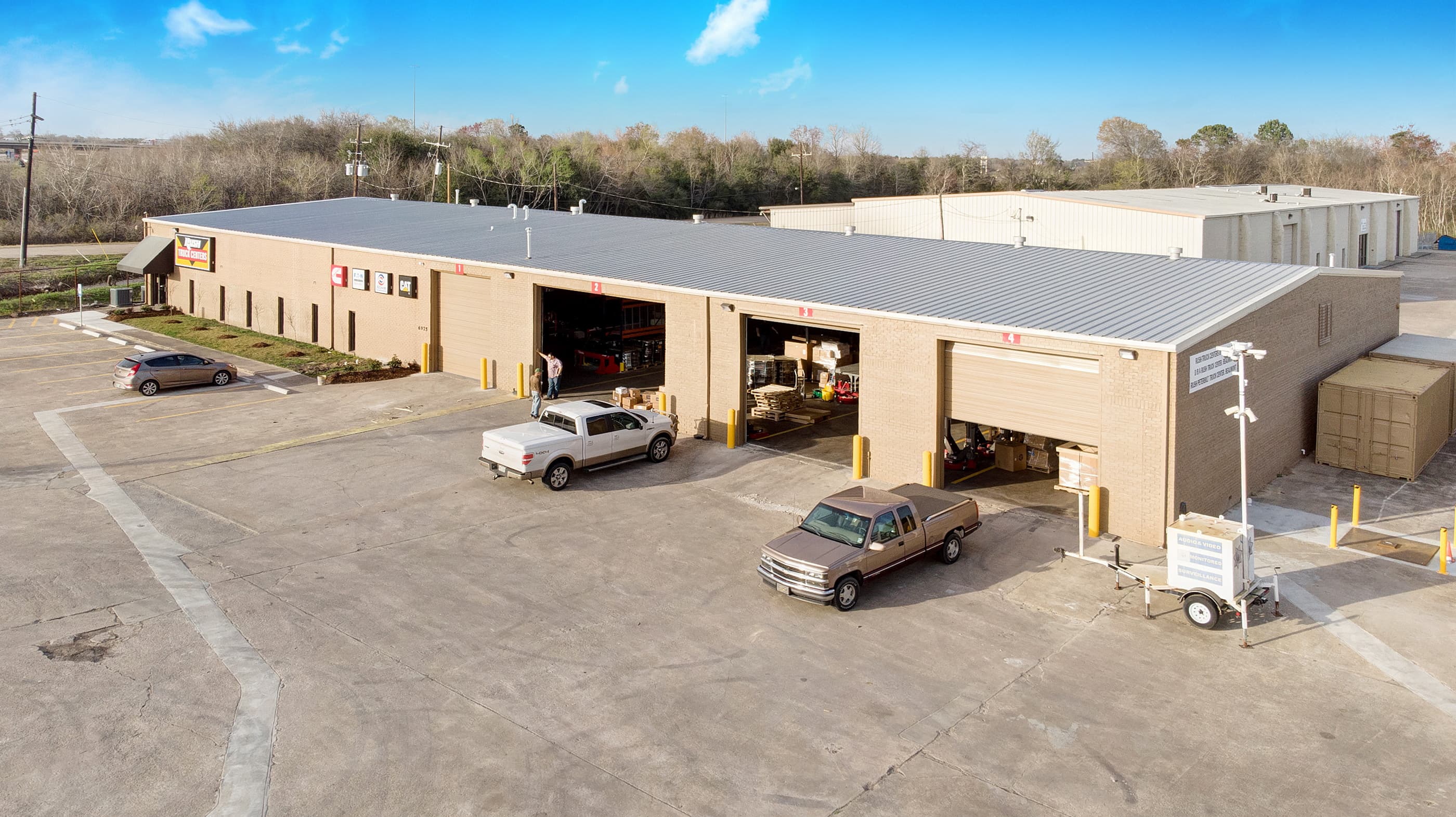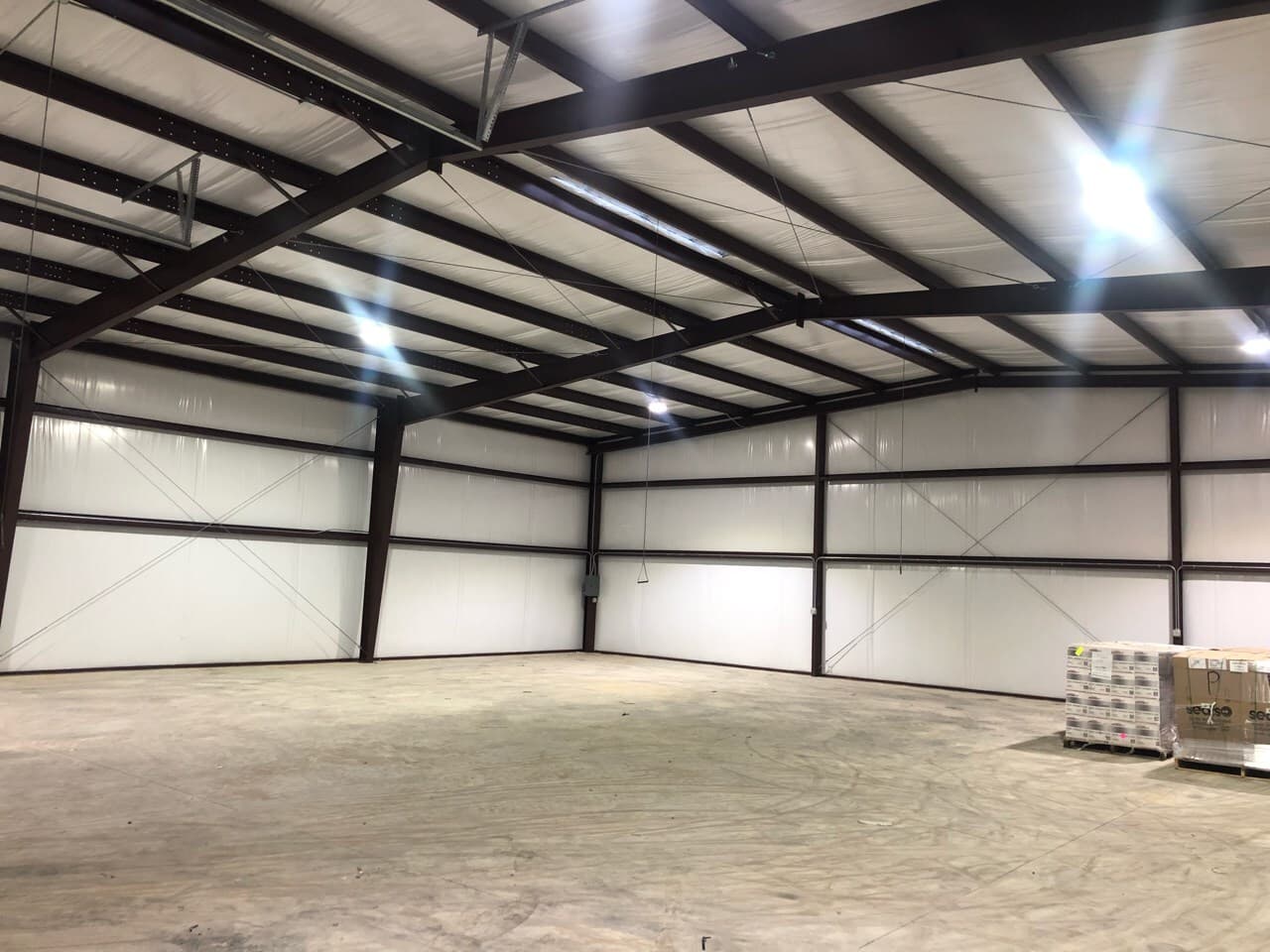
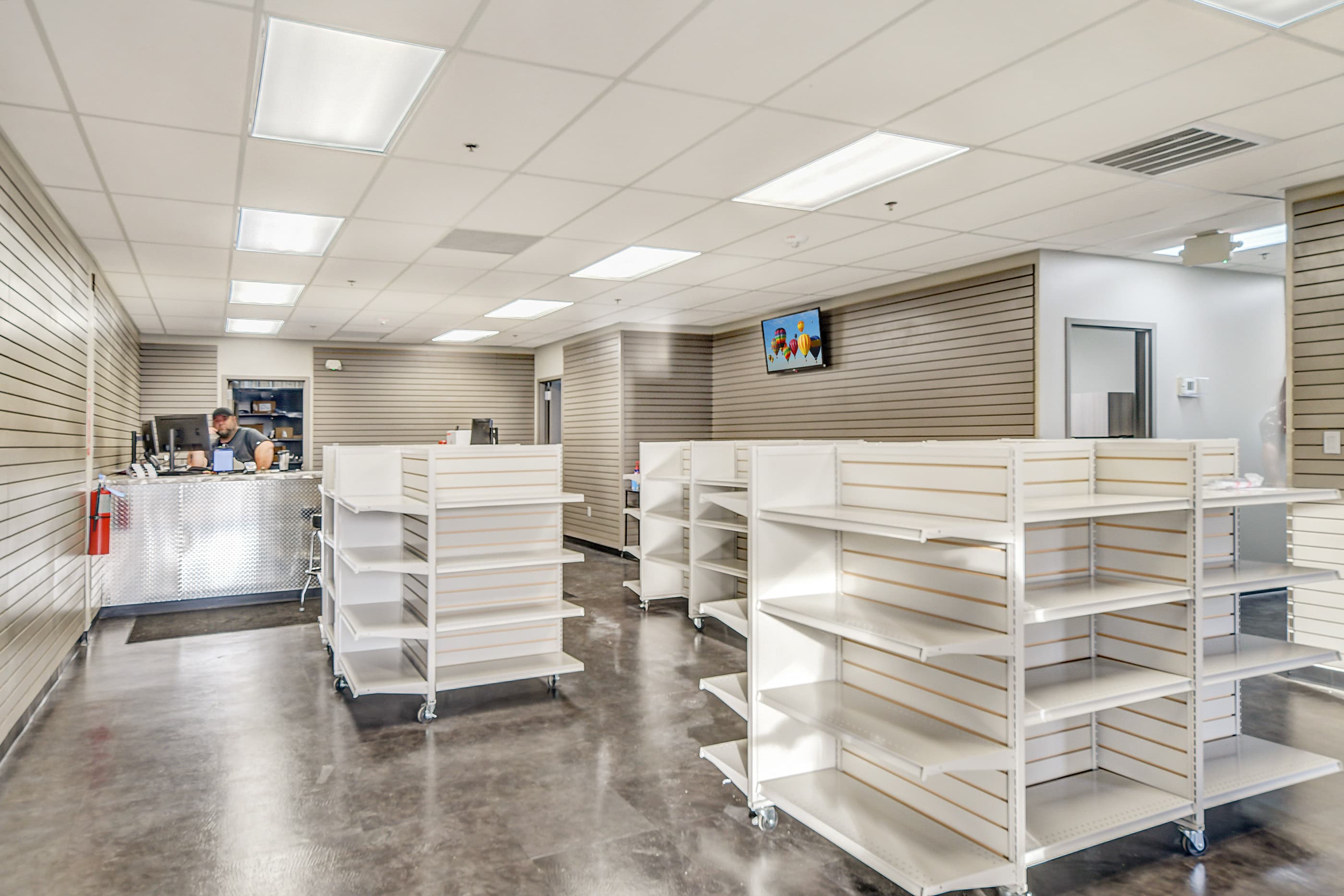
A commercial building renovation contractor is a licensed general contractor who investigates the existing conditions of a building, prices the work against what is actually there, obtains the permits, coordinates every trade, and phases construction so your business can keep operating. In East Texas in 2026, commercial renovation runs $30 to $200 per square foot — roughly $30 to $60 for a cosmetic refresh, $60 to $120 for a systems-and-layout renovation, and $100 to $200 for a full gut and rebuild.
The reason that range is so wide is that renovation cost is decided by the building, not by the finishes. Two identical-looking 6,000 square foot spaces on the same street can differ by a factor of three once their electrical service, plumbing age, structural condition, and accessibility status are known. Understanding how a competent contractor handles that uncertainty is most of what an owner needs to know before hiring one.
What Does a Commercial Renovation Contractor Actually Do?
More than build. On a renovation the construction is often the most predictable part of the job; the value is in everything around it.
- Investigation. Opening ceilings and walls, checking the electrical service and panel capacity, tracing plumbing, verifying structural conditions, testing for the materials that older buildings contain, and measuring what the drawings claim is there against what is.
- Honest pricing against findings. Producing a budget that reflects the investigation rather than an optimistic square-foot rate that will be revised three times.
- Design coordination. Bringing in an architect and engineers where the scope requires it, and making sure what gets drawn is actually buildable in the existing structure.
- Permitting and code. Determining what the renovation triggers — accessibility, energy code, fire and life safety, occupancy classification — and carrying the submittals, reviews, and inspections through certificate of occupancy.
- Trade coordination. Sequencing demolition, structural, mechanical, electrical, plumbing, fire protection, drywall, and finishes so that trades are not standing on each other.
- Phasing around your operation. Containing dust and noise, maintaining exits and accessible routes, protecting inventory and equipment, and keeping the parts of the building you still need in service.
A contractor who only does the fifth item is a builder. A renovation contractor does all six, and the first two are where projects are won or lost.
What Does Commercial Renovation Cost in East Texas in 2026?
By depth of work, for Tyler, Longview, Canton, Athens, Lindale, and the surrounding markets:
- Cosmetic refresh — $30 to $60 per square foot. Paint, flooring, ceiling tile, light fixtures, and minor millwork. No layout change, no systems work. Fast and predictable.
- Systems and layout renovation — $60 to $120 per square foot. Moving walls, reworking HVAC distribution, upgrading electrical, adding or relocating plumbing, new finishes throughout. This is the most common commercial renovation and the one with the widest variance.
- Full gut and rebuild — $100 to $200 per square foot. Everything but the structure and envelope comes out. New mechanical, electrical, and plumbing systems, new layout, new everything. Approaches new-construction cost, and on a badly deteriorated building it can exceed it.
- Exterior and envelope work — $15 to $50 per square foot of façade. Storefront replacement, façade remodel, roofing, and exterior finishes.
- Accessibility upgrades — $15,000 to $80,000 for a typical older commercial building. Entry, route, restroom, parking, and signage. On a historic downtown building with fixed party walls and a fixed floor elevation, the top of that range is easy to reach.
Where the number lands depends on the building's age and its systems more than on your taste in finishes. A 1990s suburban office with adequate service and a clean slab renovates cheaply. A 1940s downtown storefront with knob-and-tube remnants, cast iron waste lines, and a stepped entry does not. If you are still deciding whether to renovate at all, our comparison of commercial remodeling versus new construction in East Texas and our analysis of commercial renovation return on investment work through that question with East Texas numbers.
How Do You Vet a Commercial Renovation Contractor?
Renovation punishes the wrong contractor faster than any other kind of work, because there is more to get wrong and less to hide behind. Ask these:
- "Show me your commercial general liability and workers' compensation certificates." Not a claim — the certificates, current, with your project named. Many builders who advertise commercial renovation carry residential coverage that will not respond to a commercial loss.
- "How do you price unknown conditions?" The right answer is an investigation phase and an explicit, quantified contingency, not silence or a suspiciously round lump sum. Our guide to how much contingency a construction budget should carry gives the ranges to expect.
- "Who is on my site every day, and what is their name?" You want a named superintendent, not a rotating cast.
- "Which of these jobs did you self-perform and which did you sub?" Either answer is fine. Evasion is not.
- "Walk me through the last project where you found something bad in the walls." Every honest renovation contractor has one. What you are listening for is how it was communicated and how the cost was handled.
- "What does your change order process look like?" Written, priced, and approved before work proceeds — never verbal, never after. See what change orders are and how to avoid them.
- "Have you pulled permits in this jurisdiction before?" Tyler, Longview, Lindale, Mineola, Canton, and the surrounding counties each work differently, and familiarity is worth weeks.
Three references from projects finished in the last two years, and at least one where something went wrong. A contractor who has never had a problem has either not done much work or is not telling you about it.
Can You Stay Open During a Renovation?
Usually, yes — and it is one of the main reasons owners renovate rather than relocate. Phased construction around an operating business is routine work, but it has to be designed in, not improvised.
What it requires: temporary partitions and negative-pressure dust containment, sequencing that keeps a compliant exit path and an accessible route available at all times, after-hours or weekend work for the noisy and disruptive phases, temporary utilities so power and conditioning stay on where you need them, protection for inventory and equipment, and clear signage and communication so customers and staff know what is happening.
Phasing costs money — commonly 10 to 25 percent more than the same scope executed in an empty building, because the work is done in pieces, some of it at premium hours, with mobilizations repeated. That premium is almost always less than the cost of closing, and far less than the cost of losing customers to a competitor for four months. We have remodeled dealership showrooms and service buildings that never stopped taking customers, including phased work across the 15-acre Rush Truck Center Dallas HD property, where 112,000 square feet of renovation and a new 18,700 square foot building were delivered around an operating dealership.
What Triggers Code Upgrades in a Renovation?
This is the item that most often turns a modest renovation into a large one, and owners are rarely warned about it in advance.
- Change of occupancy classification. Retail becoming a restaurant, warehouse becoming office, office becoming medical — each can require added exits, upgraded ventilation, fire separation, sprinklers, grease interceptors, and more parking.
- Accessibility. In Texas, alteration projects above a dollar threshold trigger Texas Accessibility Standards review and require the altered area to comply, plus an accessible route to it. Older buildings frequently need entry, restroom, parking, and signage work as a result. Our ADA compliance guide for East Texas covers the triggers in detail.
- Extent of work. Most jurisdictions apply escalating requirements as the proportion of the building being altered rises. A 20 percent alteration and an 80 percent alteration are treated very differently.
- Structural modification. Removing or penetrating load-bearing elements pulls in structural engineering and, on older buildings, can trigger a broader review of the existing structure.
- Energy code. Replacing mechanical equipment or substantially altering the envelope brings current energy code requirements to the altered work.
None of these is a reason not to renovate. All of them are reasons to have a contractor establish the triggers during preconstruction rather than at plan review, when the budget is already fixed and the schedule is already published.
How Long Does a Commercial Renovation Take?
For a typical East Texas commercial space:
- Cosmetic refresh, 3,000–8,000 sq ft: 4 to 8 weeks.
- Systems and layout renovation, 5,000–15,000 sq ft: 3 to 6 months.
- Full gut and rebuild, 10,000+ sq ft: 6 to 12 months.
- Phased renovation around an operating business: add 25 to 50 percent to any of the above.
Add 4 to 12 weeks ahead of construction for design and permitting on anything beyond a cosmetic refresh. As with new construction, the long poles are usually plan review and long-lead equipment rather than the building work itself.
Why Do Renovation Budgets Change Mid-Project?
Three legitimate reasons and one illegitimate one, and it is worth being able to tell them apart.
The legitimate ones: concealed conditions that no reasonable investigation would have found — a failed structural member behind finishes, an abandoned line still live, contamination; owner-directed changes, where you asked for something different; and authority-driven requirements, where the plan reviewer or inspector requires something the code official interprets differently than expected.
The illegitimate one: a scope that was never properly priced. A contractor who wins a job on a number that everyone in the trade knows is too low, then recovers it through change orders, is running a business model rather than making a mistake. The defense is a detailed, line-itemed proposal — not a one-page lump sum — and a contractor who investigated the building before quoting it.
A well-run East Texas commercial renovation should land within 5 to 10 percent of the post-investigation budget. If your contractor's number is moving more than that and concealed conditions are not the reason, the original number was the problem.
Working With SYB Builders on a Renovation
We have been renovating commercial buildings across East Texas and the Dallas-Fort Worth metroplex for more than 45 years — offices, showrooms, retail, service buildings, manufacturing space, and multi-building dealership properties. Our approach on renovation work is consistent: investigate first, price against what we found, phase around your operation, and put every change in writing before it happens.
See our tenant improvement services for leased-space work and our retail, office, and showroom remodel service for interior renovation. We work throughout the region, including Longview and Gregg County, Tyler, Canton, Lindale, Mineola, Athens, and Terrell.
Get a Renovation Number You Can Build a Budget On
The most useful thing we can do for a renovation is walk your building with you before anyone writes a number down. Tell us what you have, what you want it to become, and whether you need to stay open while we do it. SYB Builders is a licensed and insured commercial general contractor based in Canton, Texas. Request a free estimate or call 903-560-8330.