Building a wedding or event venue in East Texas costs $120 to $250 per square foot for a finished barn-style metal or timber building in 2026, and most complete projects — a 6,000 to 12,000 square foot venue with site work, parking, septic, and landscaping — land between $1.2 million and $3 million all-in. Construction takes 10 to 14 months from design through certificate of occupancy. The building shell is often the simplest line item; assembly occupancy code requirements, restroom counts, parking, and wastewater are where venue budgets are won or lost.
How Much Does It Cost to Build a Wedding Venue Per Square Foot?
For the barn-style venues that dominate the East Texas wedding market — a pre-engineered metal building or timber-frame hybrid with exposed trusses, cupolas, wrap-around porches, and upgraded interior finishes — expect $120 to $250 per square foot for the finished building. Where you land in that range depends on finish level:
- $120 - $150 per square foot: Metal building shell with insulated liner panels, polished or stained concrete floors, basic restrooms, warming kitchen, and standard HVAC. Clean and functional, but competing on price rather than photos.
- $150 - $200 per square foot: The sweet spot for most successful venues. Timber accents, wood-clad interior walls, statement lighting, chandelier-rated structure, upgraded restrooms, bridal and groom suites, and covered outdoor spaces.
- $200 - $250 per square foot: Full timber-frame construction or heavy architectural detailing, commercial kitchen, climate-controlled year-round comfort for 300+ guests, and premium fixtures throughout.
A 7,500 square foot venue at $175 per square foot runs about $1.31 million for the building alone. Add $250,000 to $600,000 for site work, parking, septic, utility extensions, and outdoor ceremony areas, and the total project lands in the $1.6M to $1.9M range — squarely in the middle of the typical $1.2M to $3M all-in band. The structural approach borrows heavily from metal building and warehouse construction, which is why experienced metal building contractors deliver venues at meaningfully lower cost than conventional builders.
What Building Codes Apply to a Wedding Venue in Texas?
This is the question that separates a smooth project from an expensive surprise. Under the International Building Code, a wedding or event venue is an assembly occupancy — typically Group A-2 if food and drink service is the primary function, or A-3 for general assembly spaces. That classification triggers a cascade of requirements that a residential barn builder will not see coming:
When Does a Venue Need a Fire Sprinkler System?
Under IBC provisions adopted across Texas, A-2 occupancies generally require automatic sprinklers when the fire area exceeds 5,000 square feet or the occupant load reaches 100 or more — thresholds nearly every wedding venue crosses. A-3 spaces hit the sprinkler trigger at 12,000 square feet or 300 occupants. Budget $3 to $7 per square foot for a sprinkler system, and note that rural sites without municipal water pressure may also need a water storage tank and fire pump, which can add $60,000 to $120,000. This is one of the largest hidden costs in rural venue construction, and it needs to be resolved in schematic design, not discovered at plan review.
How Many Exits and Restrooms Does a Venue Need?
Occupant load drives everything. At the IBC assembly calculation of 7 square feet net per person for concentrated seating, a 5,000 square foot event hall can carry an occupant load of 500 or more — requiring multiple exits with panic hardware, illuminated exit signage, and emergency lighting. Restroom fixture counts follow occupant load too: for assembly occupancies, plan roughly one water closet per 40 women and one per 75 men for the first 1,500 occupants, plus lavatories and ADA/TAS-compliant accessible fixtures. A 300-guest venue realistically needs 8 to 12 total restroom fixtures. Texas Accessibility Standards review is mandatory on any Texas commercial project over $50,000, with plan review and inspection by a registered accessibility specialist running $1,500 to $3,500.
Do You Need a Full Commercial Kitchen or a Catering Kitchen?
Most East Texas venues do not need — and should not build — a full commercial kitchen. The difference is $40,000 versus $250,000 or more. A catering or warming kitchen with commercial refrigeration, warming ovens, prep tables, a three-compartment sink, and an ice machine costs $30,000 to $60,000 and supports the caterer-delivered service model that 80-90% of weddings use. A full commercial kitchen with Type I hood, grease interceptor, fire suppression, and cooking line runs $150,000 to $300,000 and only pays for itself if you plan in-house catering as a profit center. Build the warming kitchen, but rough in the utilities and structure for a future hood so the upgrade stays on the table.
How Much Parking Does a Wedding Venue Need?
Typical zoning standards require one parking space per three seats of assembly capacity. A 300-guest venue needs roughly 100 spaces, plus ADA-accessible stalls, vendor and staff parking, and drop-off circulation. At 350 square feet per space including drive aisles, that is about 35,000 square feet of parking area. Options range from engineered gravel at $3 to $6 per square foot in rural counties that allow it, to asphalt at $6 to $10, to concrete at $9 to $14. Parking is routinely a $150,000 to $350,000 line item that first-time venue developers underestimate. Our guide to commercial parking lot construction in East Texas breaks down the paving decision in detail.
Septic or Sewer: What Does Wastewater Cost for a Rural Venue?
Most venue-worthy acreage in Van Zandt and Henderson County sits beyond municipal sewer. A commercial on-site septic facility (OSSF) sized for assembly use is an engineered aerobic system designed around peak event flows — often 3,000 to 6,000 gallons on a Saturday night. Expect $40,000 to $100,000 for a commercially engineered system, including the site evaluation, design by a licensed sanitarian or engineer, and county permitting. East Texas red clay soils percolate poorly, which pushes designs toward aerobic treatment with spray or drip distribution and larger tank capacity. If municipal sewer is within reach, tap and impact fees of $5,000 to $25,000 plus line extension costs usually still beat a large commercial OSSF.
What About Serving Alcohol? TABC Considerations for Venues
Alcohol service model shapes both the license path and the floor plan. Many venues operate under a caterer's TABC permit or require clients to hire licensed bartenders, which keeps the venue itself out of the licensing business. If you plan to sell alcohol directly, TABC licensing requires distance checks from schools and churches, local wet/dry status verification — still a live issue in parts of East Texas — and a build-out that includes secure storage and defined service areas. Plan the bar location, keg cooler, and lockable storage room during design either way; retrofitting a bar into a finished venue costs three times what building it right the first time does.
What Makes an East Texas Venue Competitive?
The DFW wedding market pushes couples east on Highway 80 and I-20 every weekend, hunting for acreage, sunset views, and pricing below metroplex venues. Canton sits at the crossroads of I-20 and Highway 19, and First Monday Trade Days already pulls more than 100,000 visitors a month through the area — infrastructure, hotels, and traffic patterns that benefit venue operators. The features that book weekends in this market:
- Bridal and groom suites: 400-800 square feet each, with dedicated HVAC, salon lighting, private restrooms, and separate entrances. Non-negotiable for serious venues.
- Outdoor ceremony sites: A pergola, chapel ruin wall, or oak-grove ceremony lawn with power, landscape lighting, and an all-weather guest path. Budget $30,000 to $100,000.
- Covered porches and patios: Extend usable space at $35 to $60 per square foot versus $150+ for conditioned interior.
- A rain plan: The venues that photograph well and pivot indoors seamlessly win the deposit.
Venues in the $1.5M-$2M range in this region commonly target $4,000 to $8,500 per Saturday depending on season, with 60 to 100 events per year at stabilization — the revenue math your lender will want to see. As Canton-based commercial contractors, we watch this market from the front row.
How Long Does It Take to Build a Wedding Venue?
Plan on 10 to 14 months from design kickoff to certificate of occupancy: 2-3 months for design, engineering, and TAS review; 1-2 months for county or city permitting and septic approval; 6-8 months of construction; and a final month for inspections, punch list, and landscaping. Metal building packages carry 8-14 week fabrication lead times, so ordering steel early — while site work proceeds — protects the schedule. Our overview of metal building construction in East Texas covers how that sequencing works. Venue owners booking weddings 12+ months out should note: a spring groundbreaking supports fall-of-next-year bookings, and missing that window costs a full wedding season. Churches face many of the same assembly-occupancy rules on similar budgets — our church construction cost guide is a useful companion read.
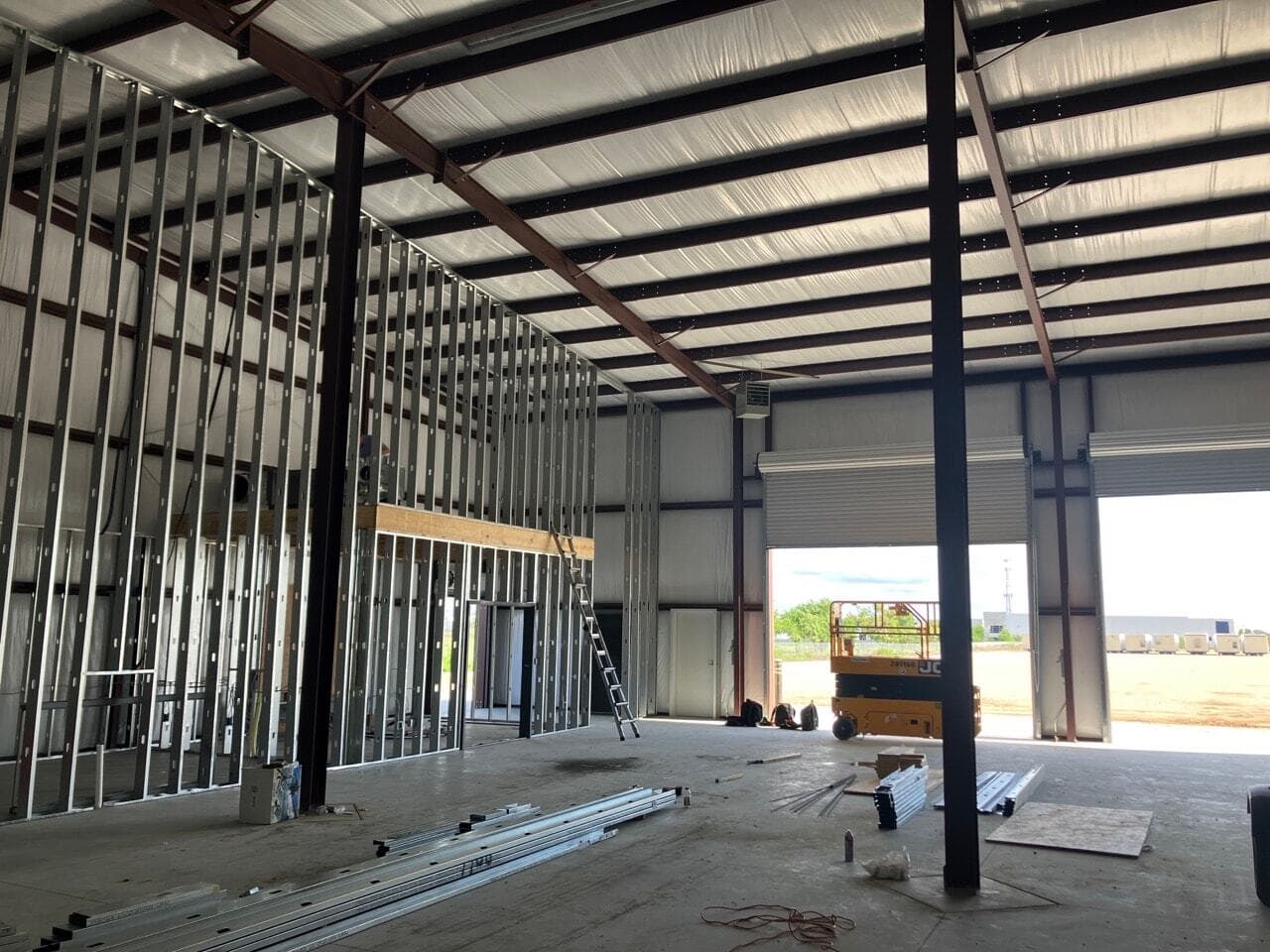
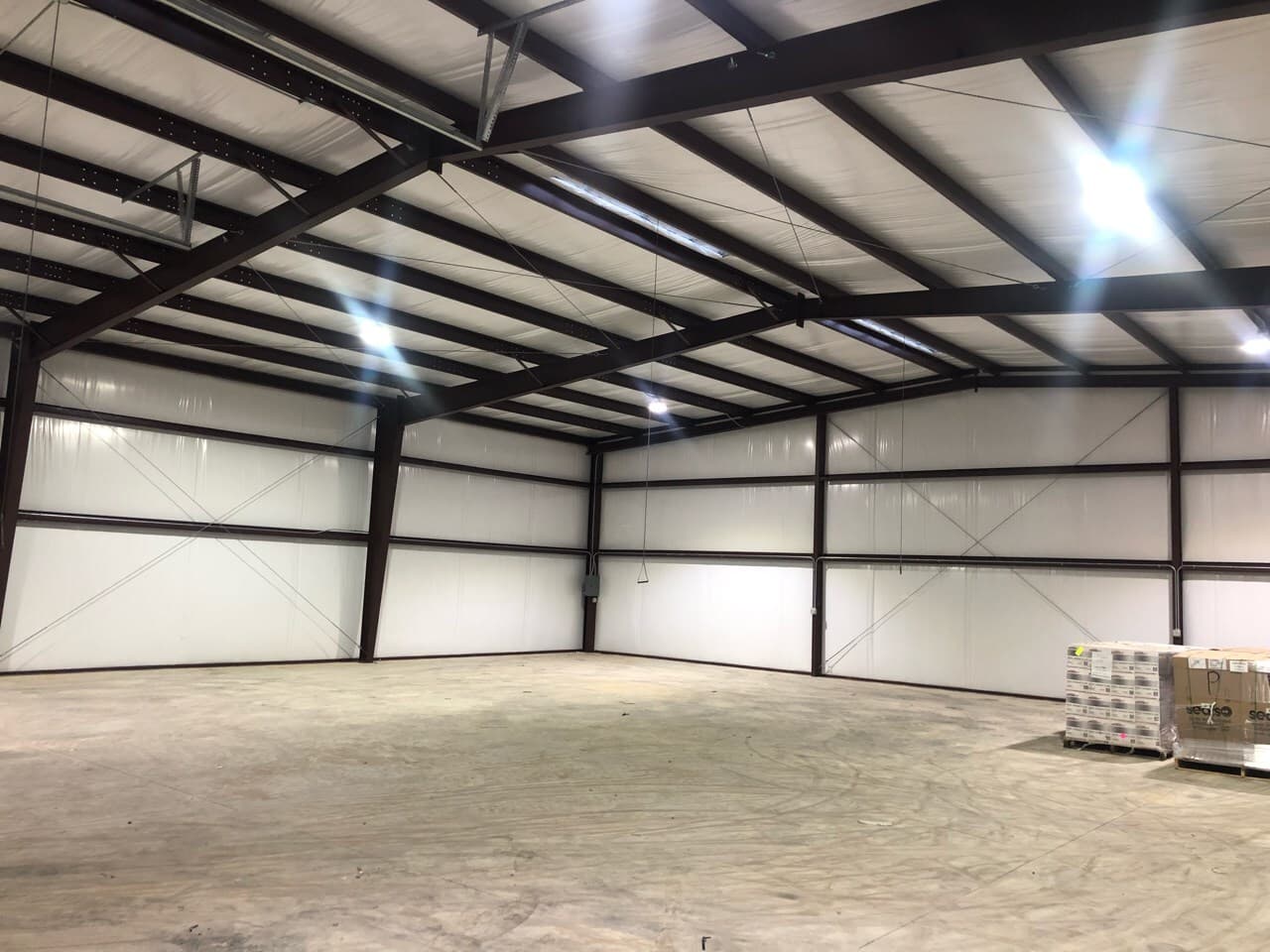
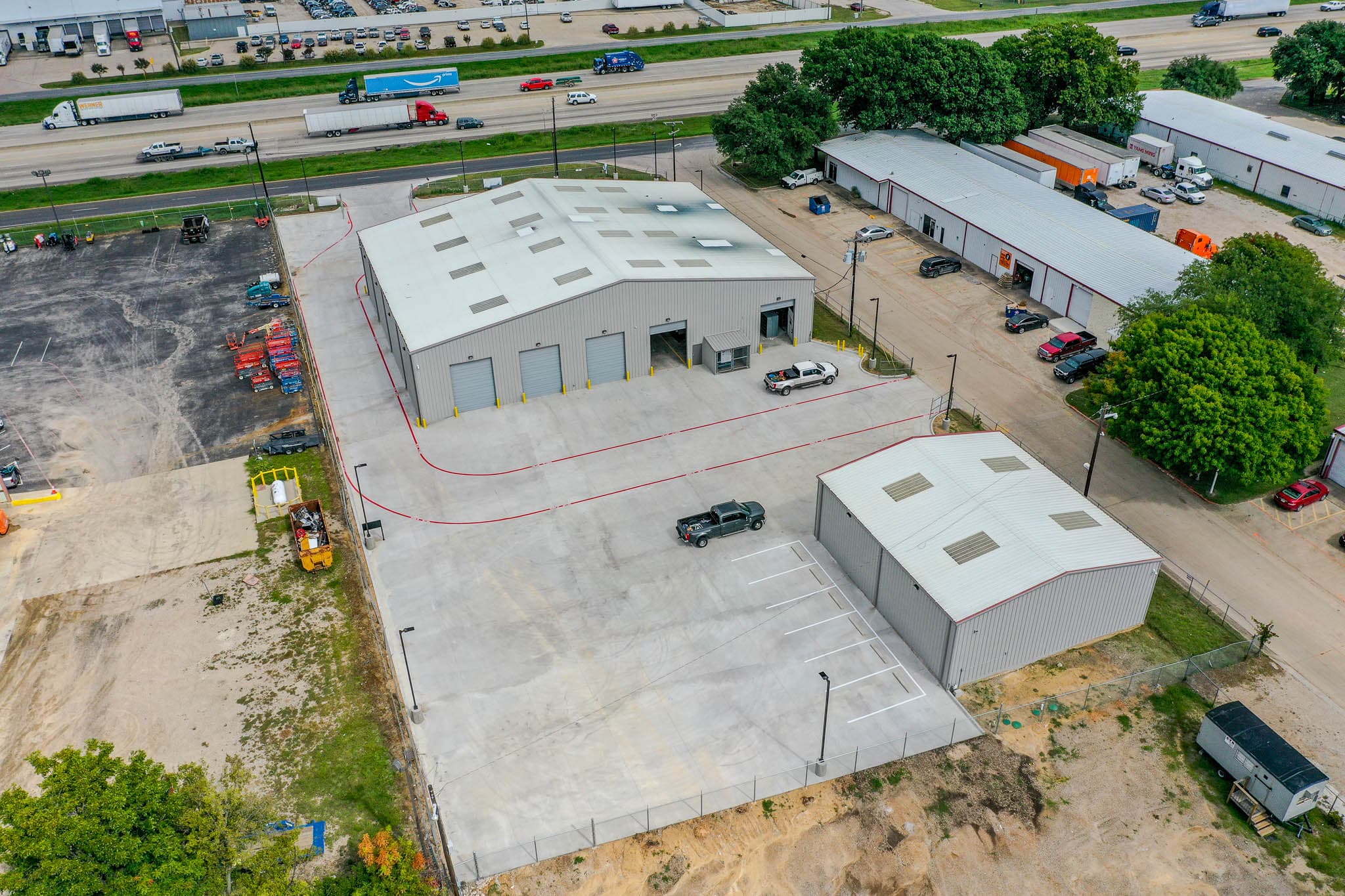
Venues are large clear-span buildings with an expensive interior, and they are usually ground-up. SYB's Satellite Shelters build covered that whole sequence — site work, 18,400 sq ft of concrete, a 12,000 sq ft structure, and full utility infrastructure — on a raw East Texas site in ten months.
Ready to Price Your East Texas Venue? Get a Free Estimate
SYB Builders is a licensed commercial general contractor headquartered in Canton, Texas, with 45+ years of experience building metal buildings, assembly spaces, and site improvements across East Texas and DFW. We know the county septic offices, the fire marshals, and the red clay under your ceremony lawn. Bring us your acreage and your business plan, and we will give you real numbers — building, site, parking, and code costs on one sheet. Request a free estimate online or call (903) 560-8330 to talk through your venue project with a contractor who has priced them before.