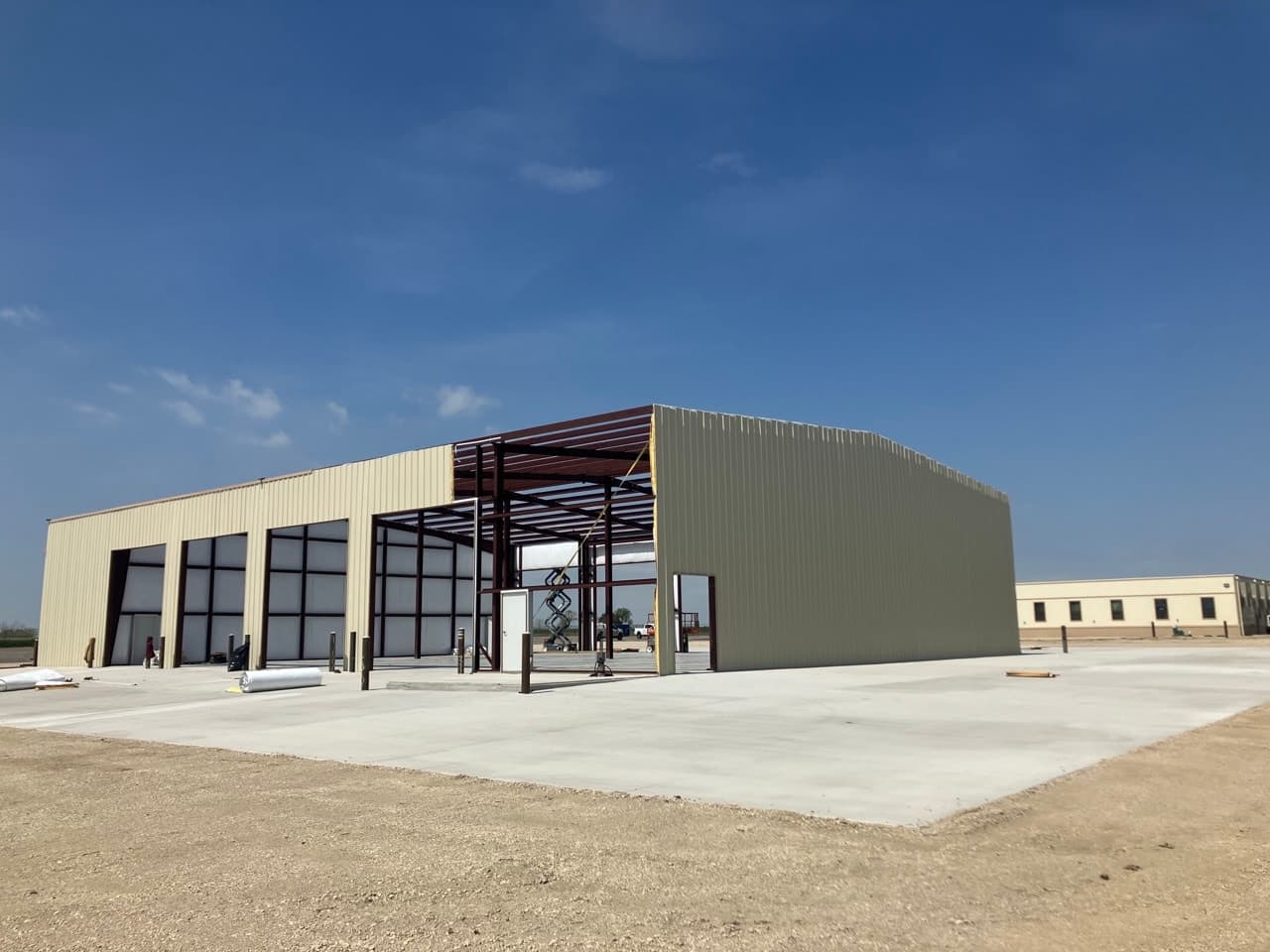
A commercial building addition costs 10-25% more per square foot than equivalent new construction, because tying into an existing structure, foundation, and roofline adds engineering, demolition, and protection work that a greenfield project never sees. In East Texas for 2026, that means metal warehouse additions run roughly $110 - $185 per square foot against $95 - $160 for new, and office or retail additions run $195 - $360 per square foot against $175 - $300 for new. The upside: you skip land acquisition, keep your address, and usually keep operating through construction.
How Much Does a Commercial Building Addition Cost Per Square Foot?
Realistic 2026 ranges for East Texas additions, including tie-in work but excluding major code-triggered upgrades to the existing building:
- Metal building / warehouse additions: $110 - $185 per square foot. Extending a pre-engineered metal building along its length is the cheapest expansion in commercial construction, because the end wall comes off and new frames repeat the existing profile. Our metal building and warehouse team does these in 3 - 5 months.
- Office additions: $195 - $360 per square foot depending on class and finish level, with matching the existing building's exterior often adding $10 - $25 per square foot in masonry and glazing costs.
- Retail and showroom additions: $175 - $320 per square foot, driven by storefront continuity and whether the addition needs its own HVAC or extends existing systems.
- Restaurant and medical additions: $280 - $475 per square foot, since every square foot added carries the same kitchen or clinical infrastructure as new construction plus tie-in costs.
A useful planning number: a 4,000-square-foot warehouse addition in Canton or Tyler typically lands between $440,000 and $740,000, while a 2,500-square-foot office addition runs $490,000 - $900,000 before soft costs.
Why Do Additions Cost More Per Square Foot Than New Construction?
The premium is concentrated in three tie-in zones:
Foundation Tie-Ins on East Texas Clay
East Texas expansive red clay makes foundation tie-ins the single riskiest line item. Your existing slab has settled and seasoned for years; a new slab poured beside it will move differently unless the geotech and structural engineers detail the joint correctly. Most additions here get engineered slab-with-piers foundations, adding $8 - $15 per square foot, plus doweled or keyed connections into the existing grade beam. Budget $5,000 - $15,000 for geotechnical borings and structural investigation of the existing foundation before design starts. Skipping that step is how additions crack. Our guide to commercial concrete and foundation work in East Texas covers the soil issues in detail.
Structural and Roofline Connections
Removing an end wall or bearing wall requires temporary shoring ($8,000 - $30,000 on most projects) and often reinforcement of existing columns that were never designed to carry the new roof load. Roofline tie-ins matter just as much: a stepped or valley connection between old and new roofs is a leak factory unless flashed and crickets are detailed properly. Matching an existing standing-seam or R-panel profile that is 15 years into its fade also means the addition will read as an addition unless you budget to recoat or re-skin the original, roughly $3 - $6 per square foot of existing wall.
Working Around an Occupied Building
Dust walls, negative air, after-hours utility cutovers, and phased slab pours all cost money a vacant site does not. Expect 5-10% of the construction budget to go to protection and phasing on an occupied-building addition.
What Building Codes Does a Commercial Addition Trigger?
This is where addition budgets get blindsided, because Texas code review looks at the whole building, not just the new square footage:
- Accessibility (ADA/TAS): Every Texas commercial project over $50,000 requires Texas Accessibility Standards plan review and inspection through a registered accessibility specialist ($2,500 - $6,000 in fees). An addition also obligates you to bring the path of travel to it into compliance, which can mean re-striping parking, adding ramps, or upgrading restrooms in the existing building at $15,000 - $75,000.
- Fire sprinklers: IBC thresholds apply to total fire area after the addition. A Group M mercantile building crossing 12,000 square feet, or a Group S-1 warehouse crossing that same fire-area threshold, can trigger sprinklers throughout, at $3 - $7 per square foot across both new and existing space, plus $20,000 - $50,000 for a fire line and riser if the site has none. Sometimes the right answer is a rated fire wall that legally splits the building into two fire areas instead, at a fraction of the sprinkler cost.
- Occupancy and structure: If the addition changes your IBC occupancy class, say office (Group B) space added to a warehouse (Group S-1), separation walls and mixed-occupancy provisions apply. Additions over 30% of existing area also commonly trigger energy code and, in some jurisdictions, wind-bracing reviews of the original structure.
- Site and stormwater: Added roof and paving area changes your drainage calculations, and disturbing more than one acre triggers TCEQ stormwater permitting.
Can You Stay Open During a Commercial Addition?
Usually yes, and for most owners that is the whole point. The playbook that works: build the addition as a stand-alone envelope first, complete roughly 90% of it, then make the wall opening and connection in a single planned phase, often over a weekend or seasonal slow period. Utility cutovers (electrical service upgrades, fire line connections, sewer taps) get scheduled after hours with temporary power or water bridging the gap. Expect some disruption anyway: 2 - 5 days of partial closure at tie-in is normal, and loading dock or parking access will be constrained for weeks at a time. We sequence deliveries and crane picks around your business hours, which is standard practice on our ground-up construction and expansion projects.
How Long Do Permitting and Construction Take for an Addition?
Additions run on similar clocks to new buildings, minus land closing:
- Investigation and design: 6 - 12 weeks, longer than new-build design because the engineers must document existing conditions first.
- Permitting: 2 - 6 weeks in Canton, Athens, and Terrell; 4 - 8 weeks in Tyler; 8 - 14 weeks in DFW suburbs. Permit fees typically run $1,500 - $8,000 in East Texas.
- Construction: 3 - 5 months for metal building additions, 5 - 9 months for office, retail, and medical additions.
One scheduling note specific to additions: because the existing building must keep operating, weather delays hit harder than on greenfield work. A tie-in phase planned for a dry October weekend cannot simply slide into a wet November without re-coordinating your operations, so we build 2 - 3 weeks of float around the connection milestone. Long-lead items also deserve early orders: pre-engineered building packages carry 10 - 16 week lead times in 2026, and electrical switchgear for service upgrades can run 20+ weeks, both of which get ordered during permitting rather than after it.
What Does a Real Addition Budget Look Like? A 4,000 Sq Ft Example
Here is how a 4,000-square-foot warehouse addition to an occupied metal building in the Canton area typically prices in 2026:
- Geotechnical and structural investigation: $8,000 - $15,000
- Design and engineering: $30,000 - $50,000, including the pre-engineered building package design and foundation engineering
- Engineered slab-with-piers foundation: $70,000 - $110,000 including tie-in detailing to the existing grade beam
- Building erection, roofing, and envelope: $260,000 - $420,000 depending on eave height, doors, and insulation package
- Electrical, lighting, and fire alarm extension: $50,000 - $90,000
- Shoring, demolition of the end wall, and tie-in phase: $25,000 - $50,000
- Permits, TAS review, and fees: $6,000 - $15,000
- Contingency at 10%: $45,000 - $75,000
Total: roughly $495,000 - $825,000, or $124 - $206 per square foot, right in line with the ranges above. The spread between the low and high end is driven mostly by three decisions made early: eave height, whether the fire-area math forces sprinklers, and how much of the existing building's electrical service can carry the new load without a service upgrade ($25,000 - $60,000 when required). Pinning those three down before design is the single best way to keep an addition on budget.
Should You Add On, Remodel, or Build New?
An addition wins when your location works, your land has room, and the existing structure is sound. But run the alternatives honestly. If the existing building needs major system replacements anyway, a gut remodel plus addition can approach new-construction cost; our comparison of commercial remodeling versus new construction in East Texas walks through where that line falls. And if the driver is simply more space rather than this specific address, it is worth checking the math in our build versus lease cost comparison before committing capital, because leasing overflow space is sometimes the right bridge while you plan a proper expansion. As a rule of thumb: when the addition exceeds 60-70% of the existing building's area, price a new building on the same site before you commit, because at that scale the tie-in premium and code upgrades often erase the savings.
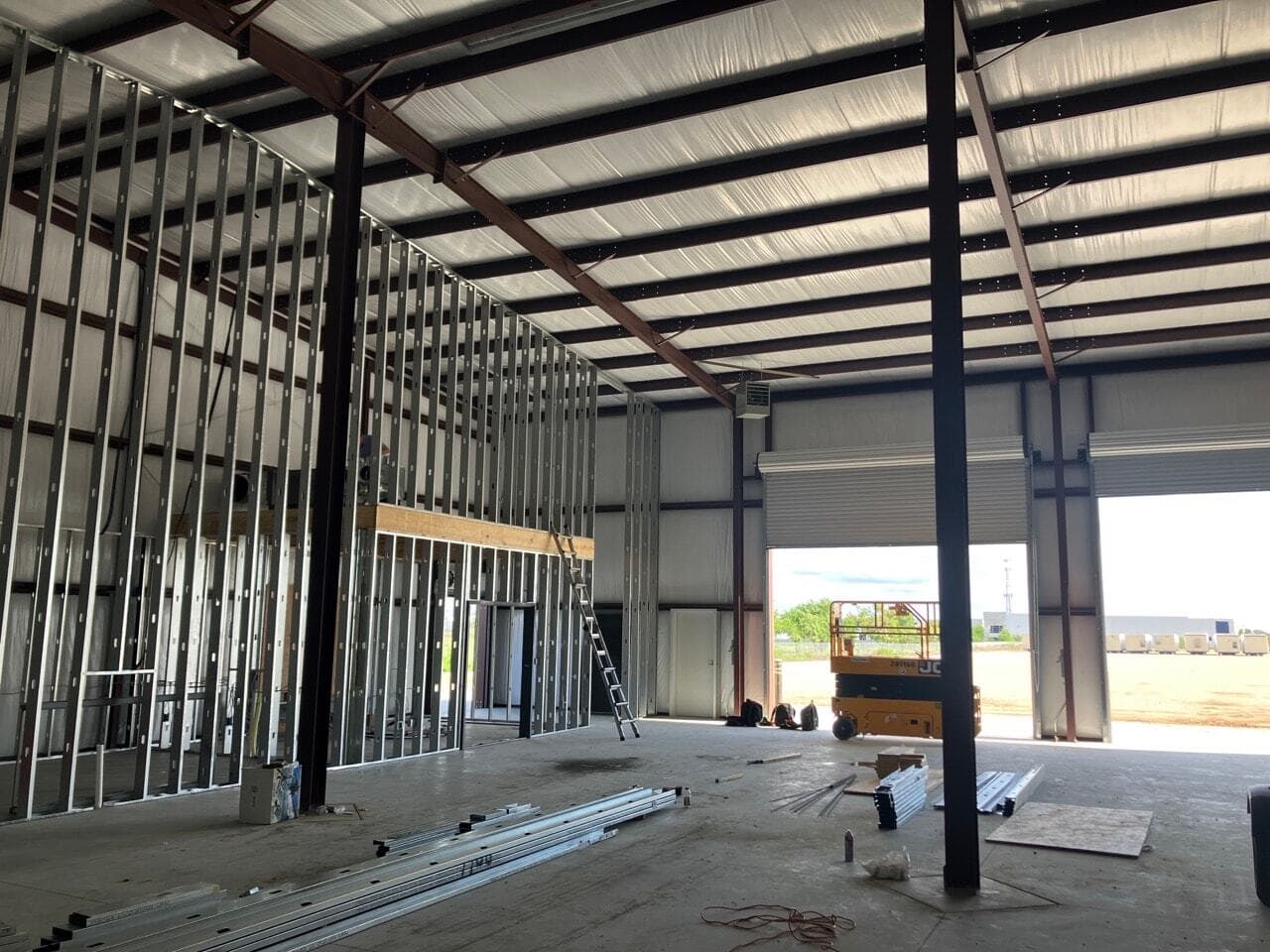
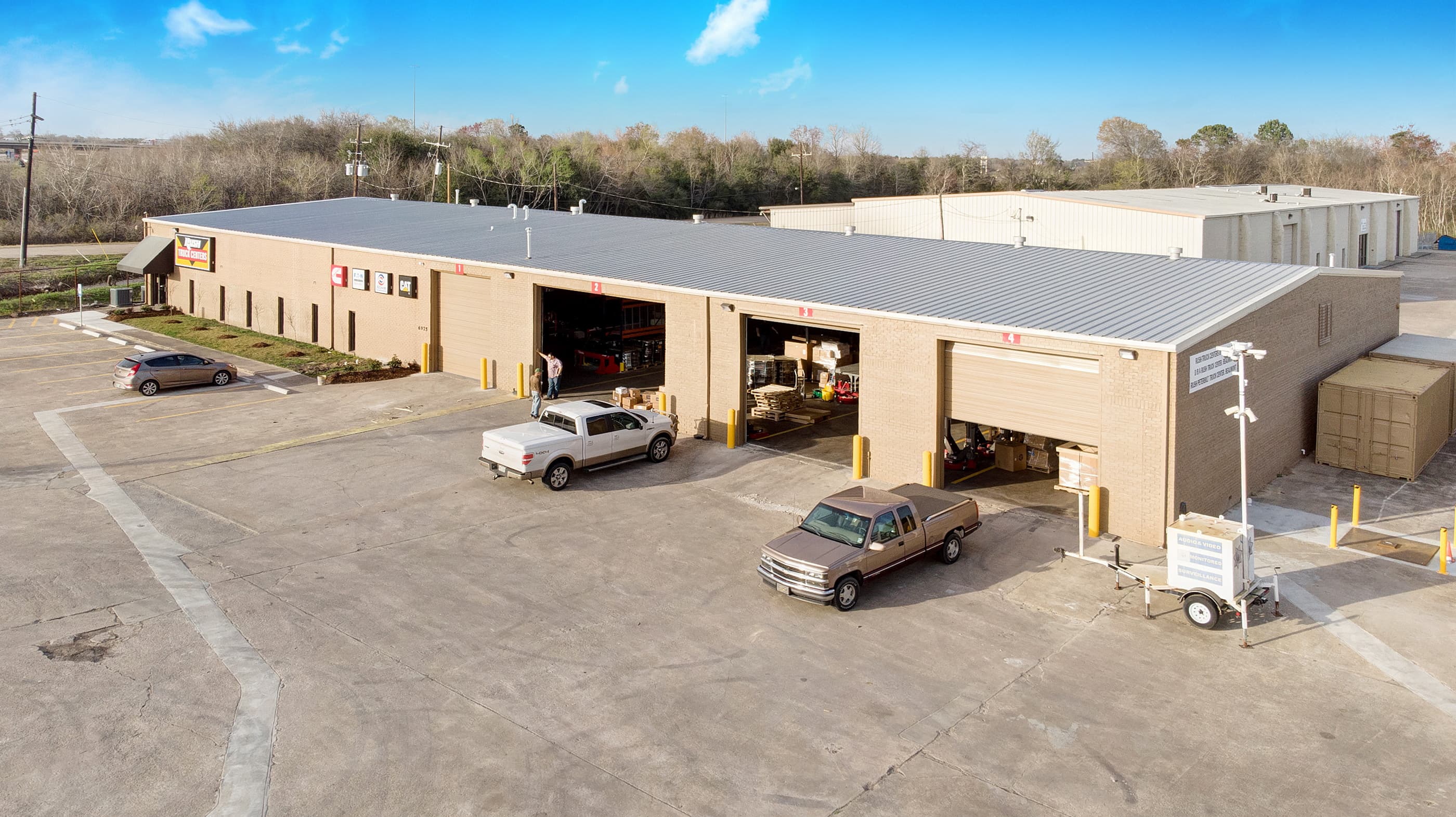
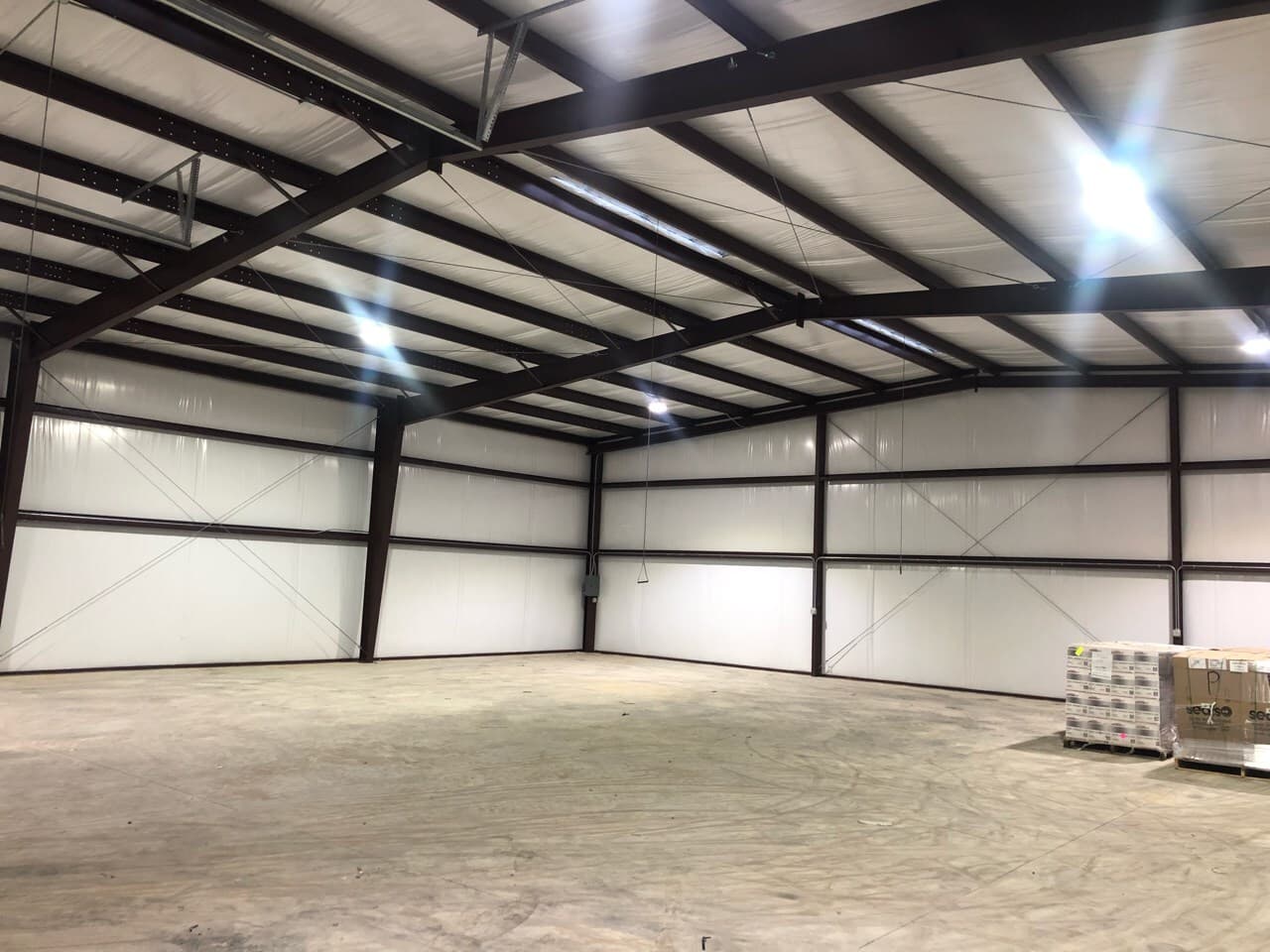
An addition is a new building that has to marry into an existing one, and the connection is the expensive part. SYB's Rush Bus Center Selma shop expansion added 6,400 sq ft on a new slab with beams and piers, tied into a working service facility and finished out to match. We build the same across East Texas.
Get an Estimate for Your Building Expansion Project
SYB Builders has been expanding commercial buildings across East Texas and DFW for 45+ years, from warehouse bay additions in Canton and Terrell to office and showroom expansions in Tyler, Athens, and Forney. We start with the existing structure, the soil, and the code triggers, so the number we give you is the number the project actually costs. Request a free estimate for your addition, or call (903) 560-8330 and we will look at your building and tell you straight whether expanding, remodeling, or building new is the better spend.