
In East Texas, leasing commercial space costs $14 - $24 per square foot per year on a triple-net basis in 2026, while building your own facility runs roughly $180 per square foot for standard commercial product, financed at interest rates near 7%. For a business that plans to stay put, ownership typically breaks even against leasing in 5 to 7 years, and every year after that, the owner is paying down principal and building equity while the tenant is writing rent checks with annual escalations. The right answer depends on your time horizon, your cash, and how predictable your space needs are.
What Does It Cost to Lease Commercial Space in East Texas?
Most East Texas commercial leases are triple-net (NNN): you pay base rent plus your share of property taxes, insurance, and common-area maintenance. Realistic 2026 numbers:
- Base rent: $14 - $24 per square foot per year NNN for retail and office space in Tyler, Canton, Athens, Terrell, and Forney. Warehouse and flex space runs lower, $6 - $12 per square foot NNN. DFW equivalents run 25-50% higher.
- NNN charges: $3 - $6 per square foot per year on top of base rent, driven heavily by Texas commercial property taxes.
- Escalations: 2 - 3% annual increases are standard, so an $18 lease today is a $23+ lease in year ten.
On a 6,000-square-foot space at $18 NNN plus $4 in pass-throughs, a tenant pays about $132,000 in year one, and roughly $1.45 million over a decade with escalations, with nothing owned at the end.
What Does It Cost to Build Your Own Commercial Building?
Take the same 6,000-square-foot building, owner-occupied, built in the Canton or Tyler area in 2026:
- Construction: 6,000 square feet at $180 per square foot = $1,080,000 for finished Class B-quality space. Metal warehouse product would run $95 - $160 per square foot; medical would run $300+.
- Land: roughly 1.5 acres at Canton-area pricing of $2 - $5 per square foot = $130,000 - $325,000. Budget the low end in Canton or Athens, the high end near Tyler corridors.
- Soft costs and contingency: design, engineering, permits, and a 10% contingency add $90,000 - $150,000.
Call it $1.3 million all-in. Full cost detail by building type is in our guide to the cost to build a commercial building in East Texas.
Build vs Lease: The Real Math on a 6,000 Sq Ft Building
Here is the side-by-side most East Texas owners ask us to run:
- Own: $1.3 million project with 10% down through an SBA 504 structure = $130,000 cash in. Financing $1.17 million at a blended rate near 7% on a 25-year amortization costs about $8,270 per month, or $99,000 per year in debt service. The owner also pays taxes, insurance, and maintenance directly, roughly the same $4 - $6 per square foot a NNN tenant pays in pass-throughs.
- Lease: the same space rents for $108,000 per year base ($18 per square foot NNN) plus the same pass-throughs, and the rent rises 2 - 3% every year while the mortgage payment does not.
Year one is close to a wash: $99,000 in debt service versus $108,000 in base rent. But the owner's picture improves every year. Principal paydown builds roughly $18,000 - $20,000 of equity in year one alone and accelerates from there. At a modest 2 - 3% annual appreciation, the building gains another $26,000 - $40,000 in value per year. Meanwhile the tenant's rent escalates past $120,000 by year five. Stack those three effects and the typical break-even lands at 5 to 7 years, after which ownership pulls ahead by six figures per five-year period.
Two honest caveats on the ownership side of the ledger. First, the owner carries roof, HVAC, and parking lot replacement reserves that a NNN tenant partially escapes; budget $1 - $2 per square foot per year for capital reserves. Second, construction takes 7 - 11 months, so a business that needs space in 90 days leases first and builds second. Neither caveat changes the long-run math, but both belong in a realistic ten-year plan.
How Do SBA 504 Loans Change the Down Payment Math?
The biggest obstacle to building is cash, and the SBA 504 program exists to solve it for owner-occupied commercial real estate. The structure: a bank lends 50% in first position, a Certified Development Company lends 40% in an SBA-backed second at a fixed rate, and the owner puts down as little as 10% (15% for startups or special-purpose buildings). On the $1.3 million project above, that is the difference between $130,000 down and the $260,000 - $325,000 a conventional loan would require. The 504 second carries a fixed rate for 25 years, which insulates roughly 40% of the debt from rate movement, and your business must occupy at least 51% of the building, which conveniently lets you lease out the rest. Our overview of how to finance commercial construction in East Texas covers 504s, conventional construction-to-perm loans, and what local lenders want to see.
What About Tenant Improvement Allowances When You Lease?
Leasing is not without its own capital story. Landlords in East Texas typically offer tenant improvement allowances of $15 - $40 per square foot on new leases, against build-out costs that run $45 - $110 per square foot for finished office or retail interiors. On a 6,000-square-foot space, that can leave the tenant funding $150,000 - $400,000 of improvements to a building someone else owns, amortized only as long as the lease lasts. Well-negotiated allowances narrow the gap, and our tenant improvement team builds those projects on both sides of the table, but tenants should count TI shortfall as real capital spend when comparing against a down payment on their own building.
How Do Taxes, Depreciation, and Equity Change the Comparison?
The cash-flow comparison understates ownership's advantage, because the two paths are treated very differently at tax time and at exit:
- Depreciation: commercial buildings depreciate over 39 years, so the $1.08 million building in our example generates roughly $27,000 per year in depreciation deductions. A cost segregation study can accelerate a meaningful share of that into the first 5 - 15 years by reclassifying site work, finishes, and specialty systems.
- Deductions either way, but different endings: rent is deductible, and so are mortgage interest, property taxes, and depreciation. The difference is what remains afterward: the tenant's deductions purchase occupancy, while the owner's deductions shelter income from an asset that is simultaneously amortizing and appreciating.
- Equity at exit: after 10 years on a 25-year amortization, the owner in our example has paid the loan down to roughly $900,000. If the building has appreciated at just 2.5% annually, it is worth around $1.66 million, putting owner equity near $760,000, from $130,000 down. The tenant's 10-year total of roughly $1.45 million in rent has produced zero.
- Rent to yourself: many owners hold the building in a separate entity and lease it to their operating company at market rent, separating the real estate from business risk and creating a clean asset for retirement or succession planning.
Run these numbers with your CPA, because brackets and structures matter, but the direction is consistent: time in the building compounds for owners and simply passes for tenants.
When Does Leasing Beat Building?
Building is not automatically the right answer. Leasing wins when:
- Your horizon is short or uncertain. If there is a real chance you relocate, outgrow, or downsize within 5 years, you will not reach break-even, and transaction costs of selling a building run 6 - 8%.
- You are growing fast. A business doubling headcount every two years should not lock its footprint in concrete. Lease flexibility is worth the premium.
- Cash earns more inside the business. If $130,000 deployed in inventory, equipment, or people returns 25%+, it may outwork real estate equity, at least for a few more years.
- You need a location you could never build. High-traffic retail corridors are often lease-only.
Ownership wins for stable, established operations: medical and dental practices, professional firms, contractors, manufacturers, and multi-generational family businesses that know where they will be in 15 years. It also fits businesses that can use extra square footage as leased income, and owners who want the building in a retirement or succession plan, since the real estate often becomes the most valuable asset the business ever creates. A middle path worth pricing: build modestly now and expand later; our guide to commercial building addition costs shows what growing in place actually costs.
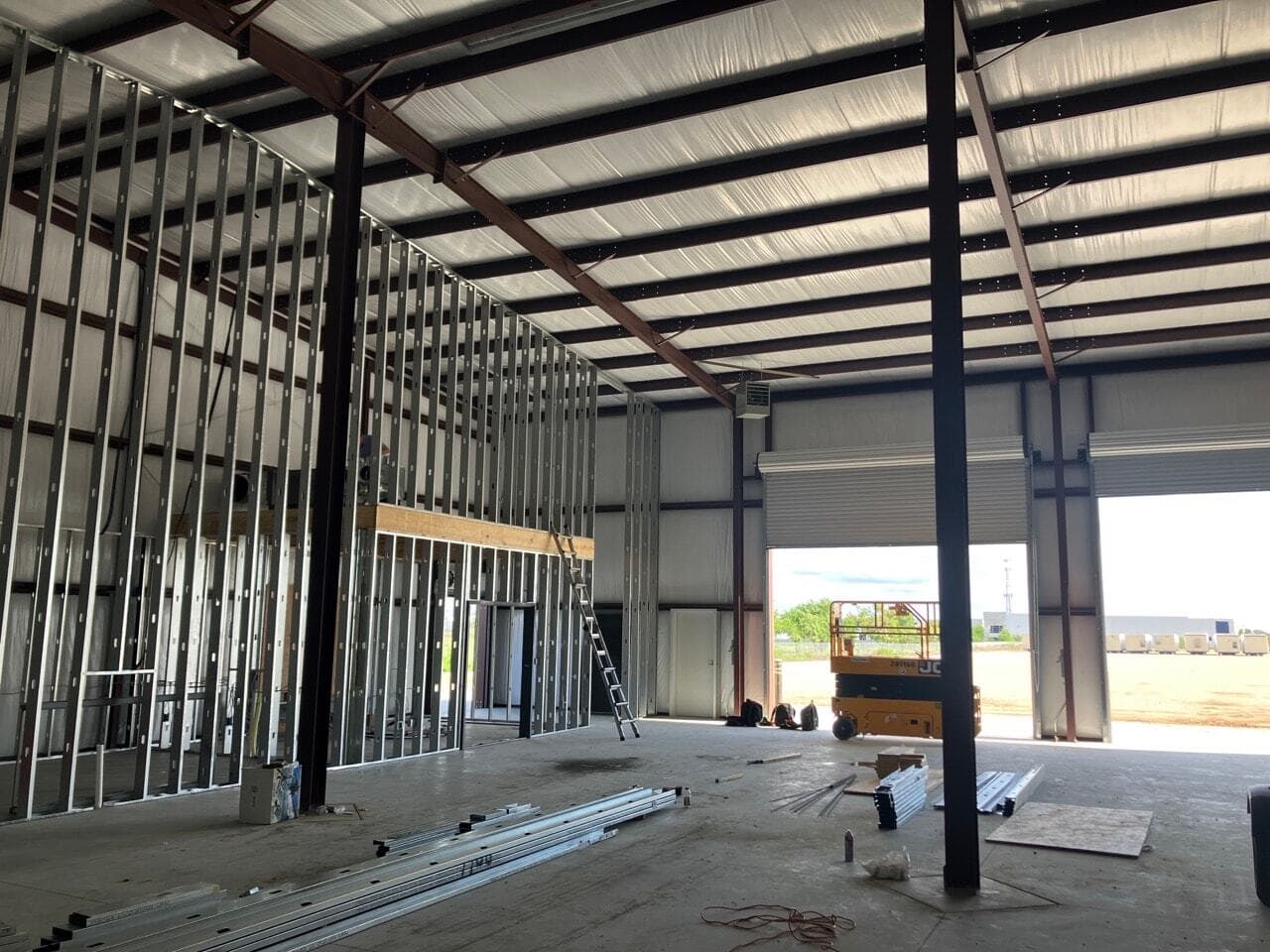
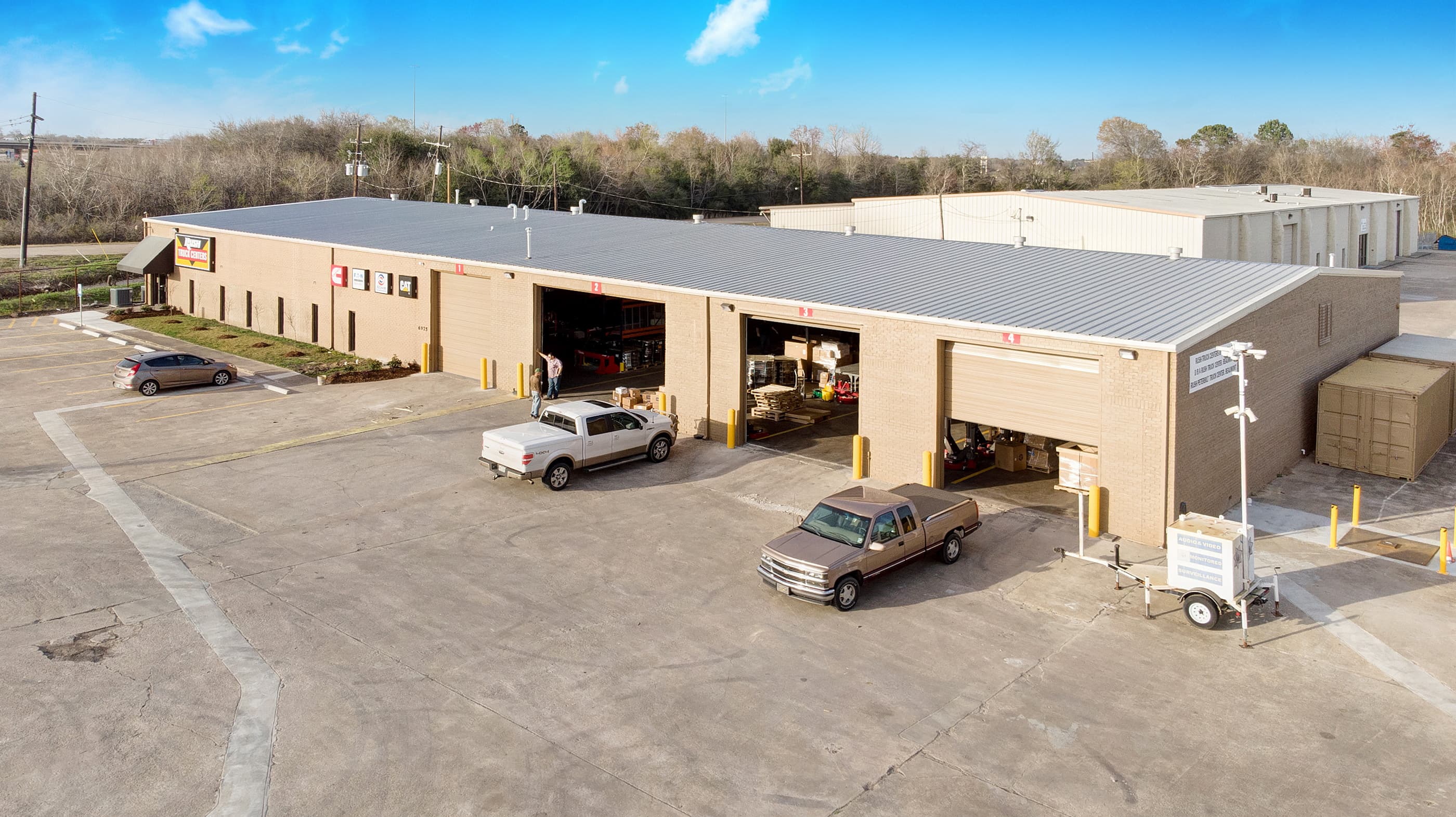
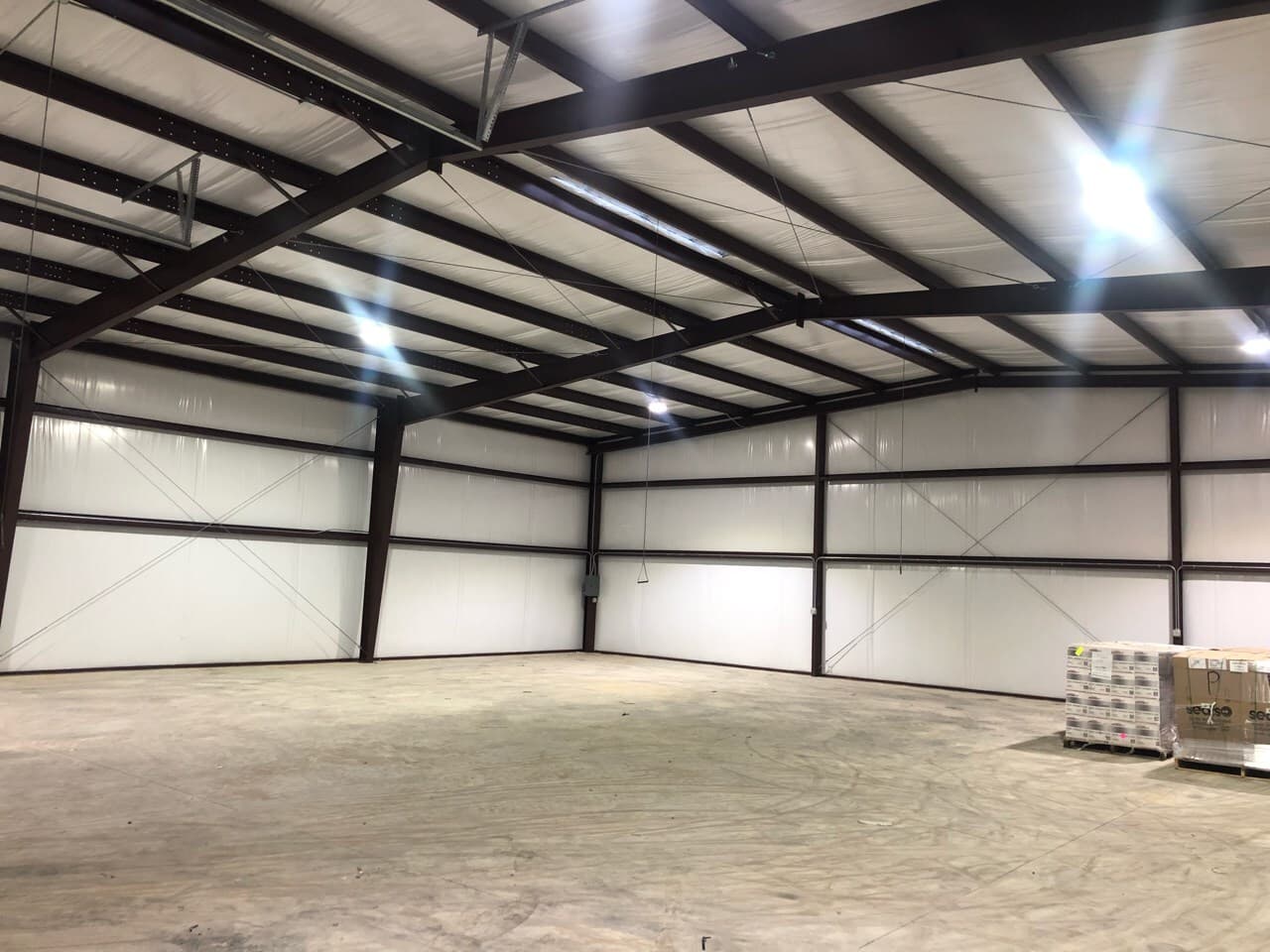
If you build, this is the shape of it: SYB's Satellite Shelters ground-up build delivered a 12,000 sq ft service building with 18,400 sq ft of concrete and full utilities in ten months — an asset owned outright rather than a lease renewed. We build across East Texas and the metroplex.
Get an Estimate for Your Build vs Lease Decision
The build-versus-lease question comes down to one number: what your building will actually cost. SYB Builders has 45+ years of experience pricing and building owner-occupied commercial projects across East Texas and DFW from our Canton headquarters, and our ground-up construction estimates are detailed enough to hand straight to an SBA lender. Request a free estimate for your building, or call (903) 560-8330 and we will run the own-versus-lease math on your actual square footage, site, and timeline, so you decide with real numbers instead of averages.