A new gas station with convenience store costs $2.5 million to $6 million or more to build in Texas in 2026. The c-store building itself runs $250 - $350 per square foot, the fuel system — underground storage tanks, dispensers, and canopy — adds $350,000 to $700,000 for a typical 3-4 tank layout, and land plus site work makes up the rest. From executed land contract to first fuel sale, plan on 12 to 16 months.
How Much Does the Convenience Store Building Cost Per Square Foot?
Modern c-stores have moved a long way from the 2,400 square foot boxes of the 1990s. Today's competitive format is 4,500 - 6,500 square feet with food service, and construction runs $250 - $350 per square foot in East Texas — 20 - 35% below what the same building costs in the DFW metroplex. That figure covers more than a retail shell:
- Refrigeration: A 15-25 door walk-in cooler and freezer package runs $150,000 - $300,000 installed and is usually the single largest interior line item.
- Heavy electrical: Coolers, food equipment, fuel dispensers, canopy lighting, and signage typically demand an 800 - 1,200 amp service.
- Restrooms and finishes: Travel-oriented stores win on restrooms; ADA and Texas Accessibility Standards (TAS) compliance is mandatory, and any project over $50,000 requires TDLR plan review and inspection.
- Foundation: On East Texas red clay, an engineered slab-with-piers foundation adds $8 - $15 per square foot but protects a building full of door seals, plumbing, and refrigeration lines from differential movement.
All-in, a 5,000 square foot store body typically lands between $1.25 million and $1.75 million before fuel infrastructure. SYB Builders delivers these projects through our ground-up construction service, from pad to punch list.
What Do Fuel Canopies, Dispensers, and Underground Storage Tanks Cost?
The fuel side of the project is its own construction discipline with its own specialized subcontractors. For a typical 8-12 fueling position station, budget:
- Underground storage tanks: $350,000 - $700,000 for a 3-4 tank fiberglass or composite system of 12,000 - 20,000 gallons per tank, installed. That includes excavation, backfill, double-wall piping, sumps, and leak detection — not just the tanks themselves.
- Dispensers: $25,000 - $40,000 per dual-sided dispenser with EMV payment, so $100,000 - $240,000 for a 4-6 dispenser layout.
- Fuel canopy: $150,000 - $350,000 for a steel canopy with LED lighting and branding fascia over 8-12 positions.
- Concrete fuel pad: Heavy-duty reinforced paving under the canopy at $10 - $14 per square foot, engineered for tanker traffic.
Tank excavations run 12 - 16 feet deep, which is exactly where East Texas clay and groundwater complicate things. Dewatering, tank ballasting, and proper select backfill are not places to economize — a failed tank installation is a six-figure do-over.
What TCEQ Rules Apply to Underground Storage Tanks in Texas?
The Texas Commission on Environmental Quality regulates every UST system in the state, and compliance starts before the first shovel of dirt moves:
- A UST construction notification must be filed with TCEQ at least 30 days before installation, and the system must be registered on TCEQ Form 0724 before fuel is delivered.
- Installers must hold TCEQ UST contractor licensing, and the system needs double-wall tanks and piping, automatic tank gauging, overfill prevention, and corrosion protection.
- Owners must maintain financial assurance for corrective action of $1 million per occurrence for petroleum retailers, and a TCEQ-issued delivery certificate must be current before any fuel drop.
- Stage I vapor recovery applies in certain Texas counties, and spill containment testing recurs on a 3-year cycle after opening.
Getting the TCEQ sequence right is a schedule issue as much as a legal one: miss the notification window and the tanks sit in a laydown yard while the calendar burns. As general contractor, SYB Builders sequences the licensed fuel contractor's work into the master schedule so tank testing, backfill, and paving happen in the right order.
Where Should You Build a Gas Station in East Texas?
Fuel retail is a traffic-count business, and East Texas has one of the best fuel corridors in the state: Interstate 20. Roughly 40,000 - 80,000 vehicles per day move along I-20 between Dallas and the Louisiana line, and interchange pads at Terrell, Canton, and Tyler-area exits capture both commuter and long-haul traffic. Canton alone adds a demand spike most markets never see — First Monday Trade Days draws 100,000+ visitors a month, and every one of them arrives by vehicle. Our breakdown of commercial construction along the I-20, I-30, and I-35 corridors covers interchange site selection in detail, and our Terrell, TX location page profiles one of the strongest gas station submarkets in the region, where I-20 meets Highway 34 and the westbound DFW commute begins. When comparing pads, prioritize signalized access, 300+ feet of frontage, and utilities at the property line — a site that needs a half-mile sewer extension can erase the savings of cheap land.
How Much Do Utilities and Site Work Add?
A 1.5 - 2 acre fuel site typically carries $400,000 - $900,000 in site work: grading, storm drainage, 25,000+ square feet of paving, lighting, and landscaping. Underground utility scope deserves special attention because fuel sites need generous water and sewer service for food operations, grease and sand-oil interceptors, and careful separation between utility trenches and fuel piping runs. Tap and impact fees range from $15,000 in small East Texas cities to $100,000+ in DFW suburbs. SYB Builders self-performs trenching and coordination through our underground utilities division, which keeps the most schedule-sensitive phase of the project under one roof.
What Do Food Service Add-Ons Cost?
Food is where modern c-stores make their margin — fuel often nets only $0.05 - $0.15 per gallon, while prepared food margins run 50%+. A branded quick-service counter or made-to-order kitchen adds $150,000 - $500,000 to the build: commercial hoods at $25,000 - $60,000 installed, a grease interceptor at $15,000 - $40,000, and Texas Department of State Health Services (or county health department) plan review and permitting for the retail food establishment. Kitchen build-outs push that portion of the store toward restaurant-grade costs of $250 - $400 per square foot, so scale the kitchen to the traffic the site can actually feed.
How Do You Keep a Fuel Project on Budget?
Fuel projects blow budgets in predictable places, and every one of them is avoidable with front-end discipline:
- Order long-lead equipment at permit submittal. Tanks, dispensers, and canopy steel still carry 3 - 6 month lead times in 2026. Owners who wait for permit issuance to order equipment routinely add 8 - 12 weeks of dead time to the schedule, and every idle month on a $4 million project costs $15,000 - $30,000 in carrying costs alone.
- Spend on geotechnical borings early. A $5,000 - $10,000 geotechnical report tells you whether the tank hole will hit groundwater and what the slab-with-piers foundation really requires. Discovering water at 14 feet after excavation starts means emergency dewatering at $2,000 - $5,000 per day.
- Confirm utility capacity in due diligence. A will-serve letter from the water and sewer provider costs nothing; a half-mile line extension costs $150,000 - $400,000.
- Carry a 10 - 15% contingency. Fuel sites combine deep excavation, environmental regulation, and multiple specialty contractors — more moving parts than almost any retail project of similar size.
- Keep one throat to choke. When the fuel contractor, canopy erector, and building GC are three separate contracts held by the owner, schedule gaps between them belong to you. Under a single general contract, they belong to us.
How Long Does Gas Station Construction Take?
A realistic 2026 timeline runs 12 to 16 months end to end:
- Site selection and due diligence: 1 - 2 months, including Phase I environmental — non-negotiable on fuel sites.
- Design and engineering: 2 - 3 months for civil, architectural, and fuel system drawings.
- Permitting: 2 - 4 months covering city site plan, building permit, TDLR accessibility review, health department plan review, and the 30-day TCEQ UST notification.
- Construction: 6 - 8 months, with tank installation, building, and canopy phases overlapped.
- Commissioning: 3 - 5 weeks for tank testing, fuel delivery certification, POS integration, and health inspection.
Weather is the wild card East Texas builders plan around: tank excavations and slab pours are the phases most exposed to spring rains, so a schedule that puts underground work in the driest available window can protect 4 - 6 weeks of float that a calendar-blind schedule gives away.
Owners pairing fuel with a wash should read our companion guide on car wash construction costs in Texas — an in-bay automatic adds $300,000 - $600,000 to a fuel site and shares the same paving, utilities, and permitting cycle.
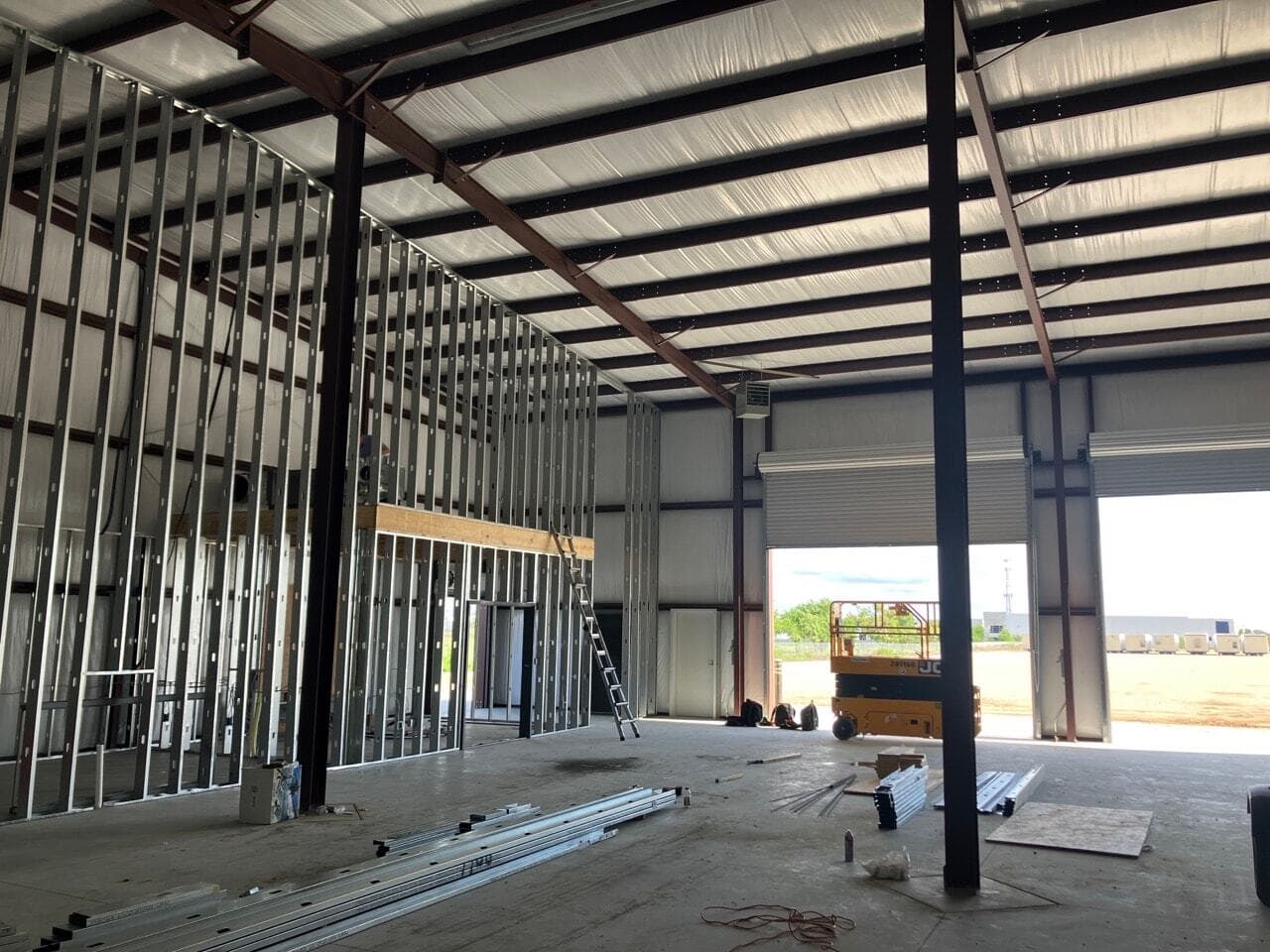
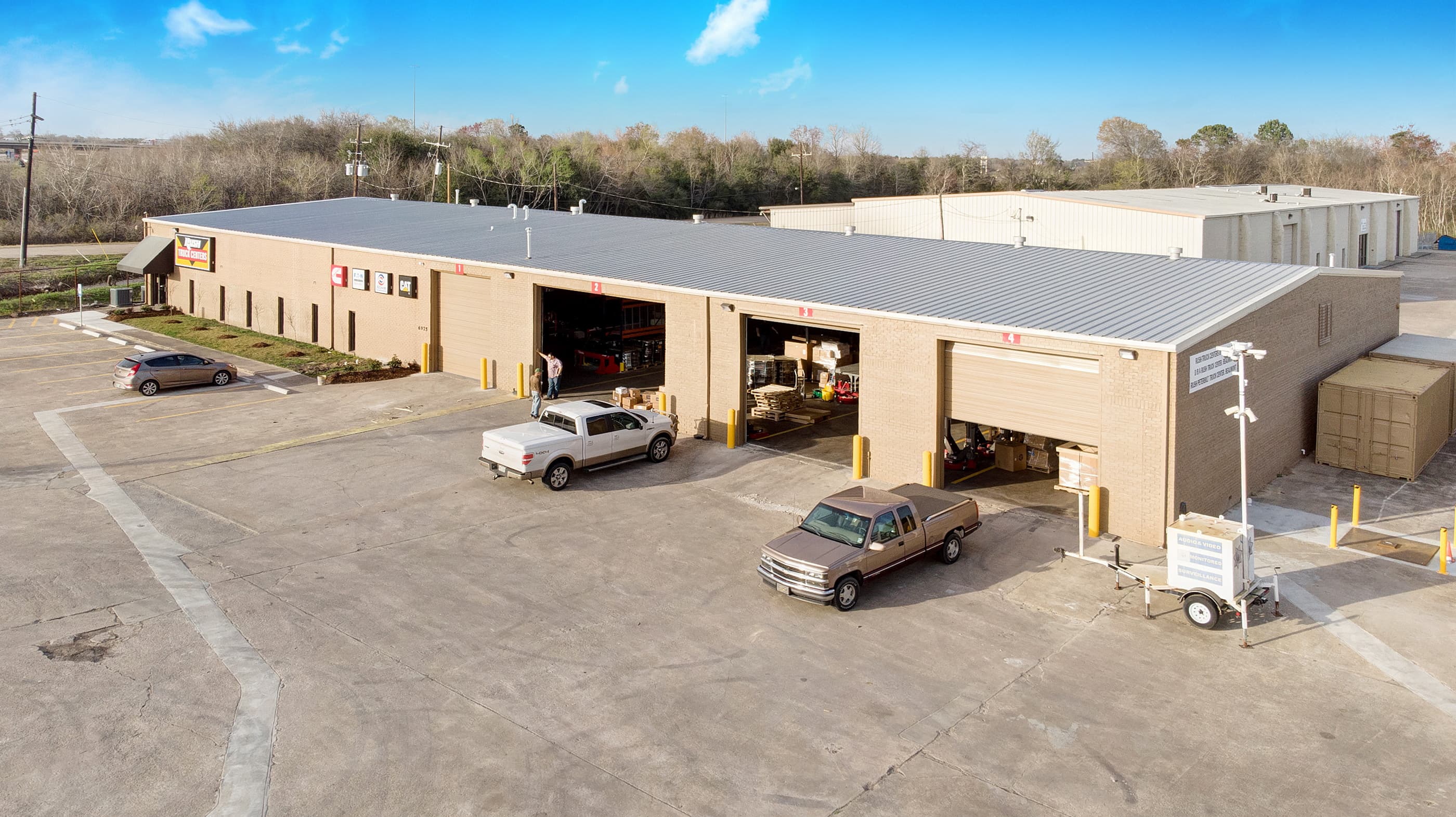
Fuel sites bring environmental and equipment requirements that ordinary retail does not. SYB's Cummins Clean Fuel project involved a production expansion and office renovation carried out under protection protocols for sensitive equipment — the kind of controlled work fuel-related construction routinely demands.
Get a Construction Budget for Your Gas Station or C-Store
SYB Builders is a licensed commercial general contractor headquartered in Canton, TX with 45+ years of experience building along the I-20 corridor and across East Texas and DFW. We manage the whole sequence — engineered foundations on red clay, underground utilities, the store building, canopy coordination, and TCEQ-licensed fuel contractor scheduling — under one contract. Request a free estimate or call (903) 560-8330 and we will put real numbers on your site before you commit to the land.