Last Updated: May 2026.
Commercial construction along the I-20, I-30, and I-35 corridors in East Texas is the most active development environment we have seen in 45+ years of building. Each corridor offers a different mix of land cost, traffic, utility access, and zoning, and the right corridor for your project depends on what you are building and who you are serving. SYB Builders has built dealerships, warehouses, retail, and industrial facilities along all three highways from Terrell and Forney through Sulphur Springs to Denton, and this guide breaks down what is driving the demand, where the opportunities are in 2026, and what TxDOT and city requirements you need to plan for.
Why Highway-Adjacent Commercial Property Is Booming in East Texas
Three things are driving the surge in I-20, I-30, and I-35 commercial development:
- DFW spillover: Land in the urban DFW core now trades at prices that no longer pencil for warehouse, distribution, and big-format retail. Operators are moving 20-60 miles east, north, and south to corridors with affordable land and the same highway access.
- Logistics demand: E-commerce and same-day delivery have pushed last-mile distribution centers closer to suburban and exurban markets. Sites within 30 miles of DFW with highway frontage are aggressively pursued.
- Population growth: Kaufman, Hunt, Hopkins, Smith, and Denton counties are growing 2-4% per year, creating residential rooftops that pull retail, restaurant, healthcare, and service uses with them.
Highway visibility, traffic counts of 50,000-150,000+ vehicles per day, and ease of regional access are the assets these corridors offer. The challenges are TxDOT access management, utility tie-in distance, and the planning department of whichever city or county owns the land.
Which East Texas Highway Corridor Is Right for Your Project?
The three major corridors serve different markets and project types. The table below summarizes the differences as of 2026:
| Corridor | Key Cities | Strongest Uses | Land Cost ($/sf) | Avg Daily Traffic |
|---|---|---|---|---|
| I-20 East | Terrell, Forney, Lindale, Tyler | Warehouse, distribution, truck dealerships, fuel/travel | $3-$14 | 50,000-95,000 |
| I-30 East | Royse City, Greenville, Sulphur Springs | Retail, restaurants, healthcare, warehouse | $4-$16 | 45,000-85,000 |
| I-35E North | Denton, Sanger, Valley View, Gainesville | Mixed retail, restaurants, hospitality, office | $12-$35 | 110,000-185,000 |
What Is Driving I-20 East Corridor Construction in Terrell and Forney?
The I-20 corridor east of Dallas through Kaufman County is the hottest industrial and logistics market in East Texas in 2026. Major activity:
- Terrell has seen 4+ million square feet of new warehouse and distribution construction in the past 24 months
- Forney has multiple master-planned industrial parks under construction near US-80 and I-20 interchanges
- Land costs along the I-20 frontage road in Kaufman County run $3-$8 per square foot, compared to $18-$35 per square foot for similar sites in southern Dallas County
- Major employers including Bimbo Bakeries, Goodyear, and Niagara Bottling have built large facilities in the corridor
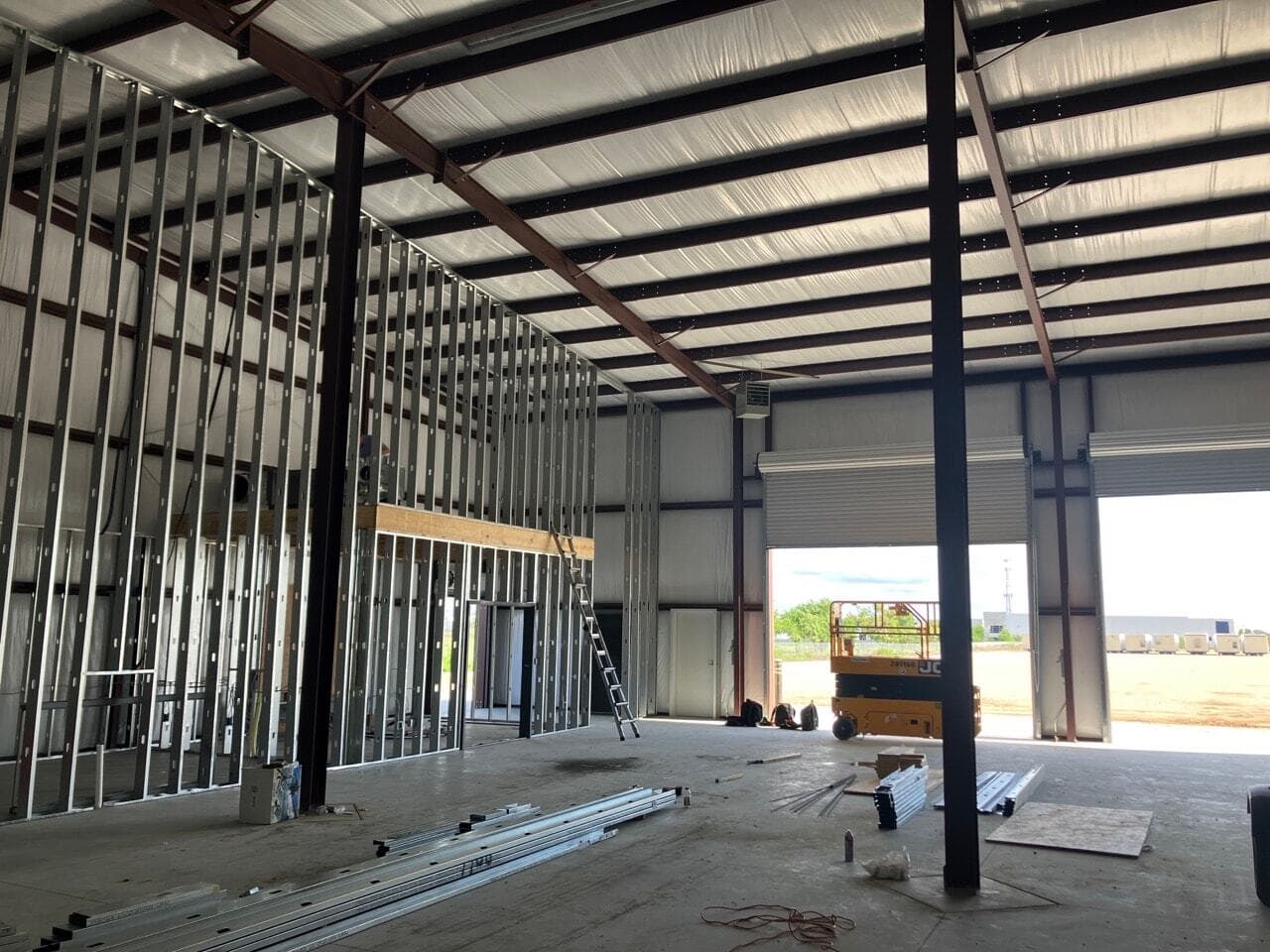
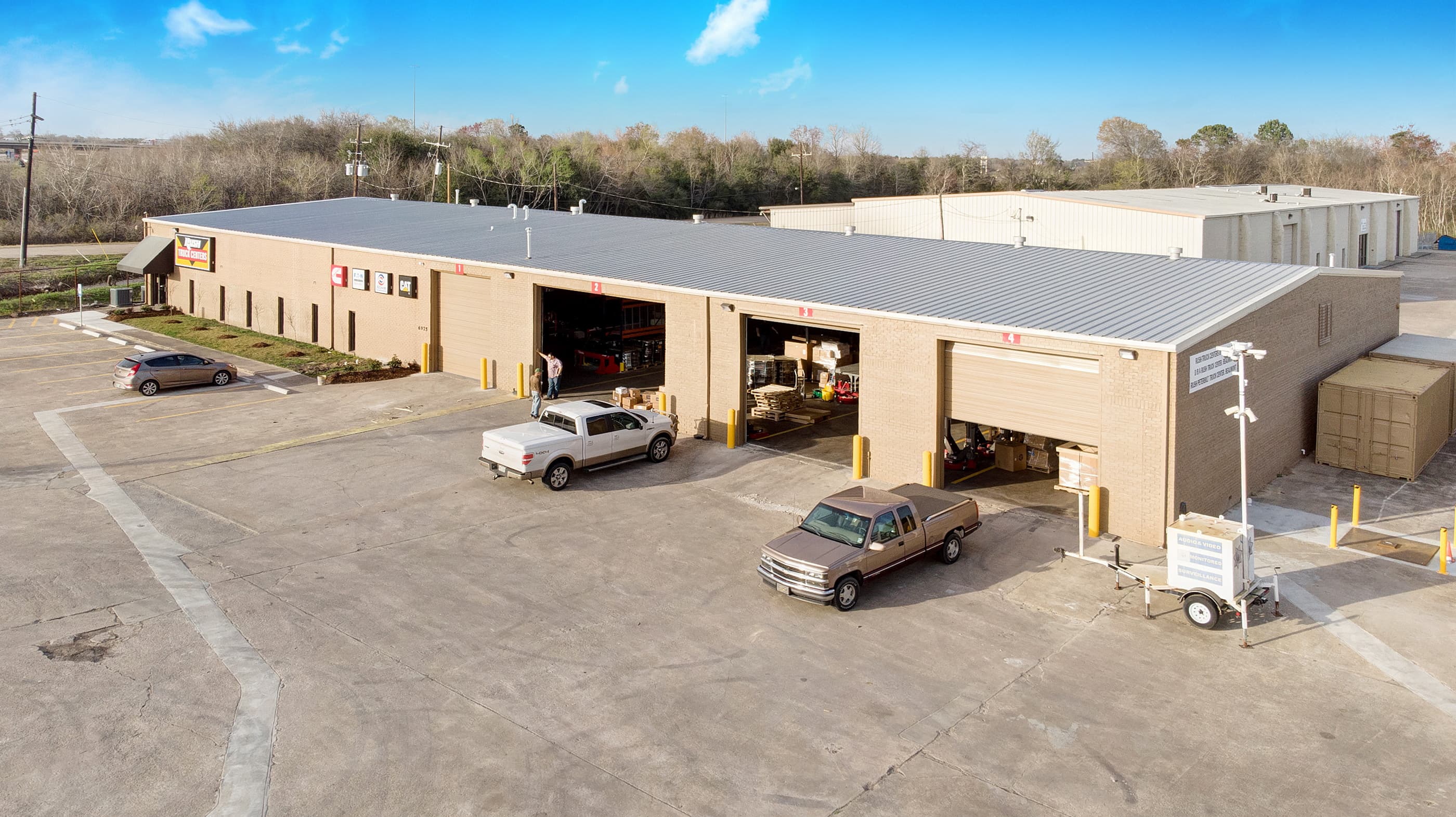
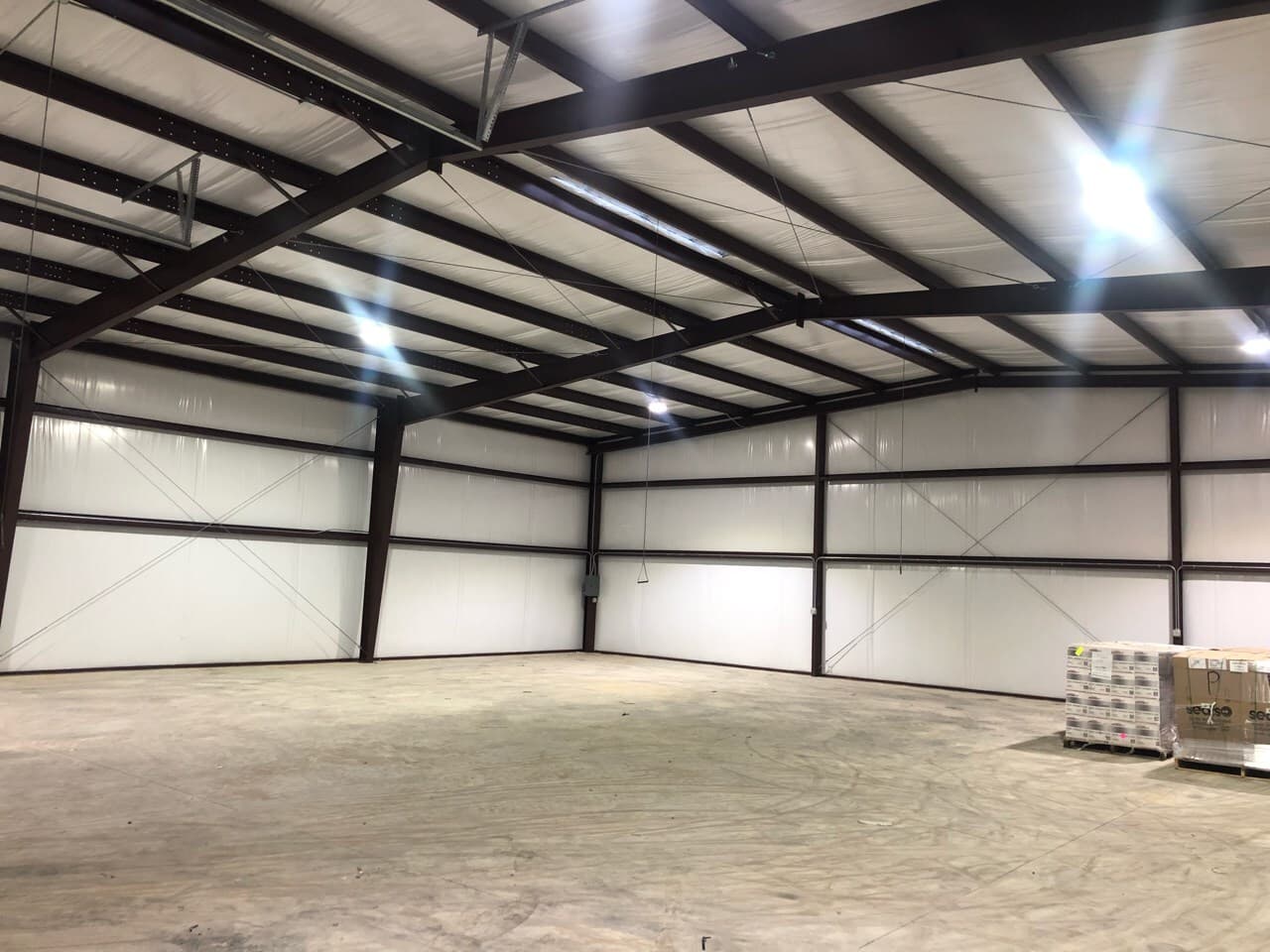
For users with truck and trailer operations, I-20 access plus the room to maneuver makes the corridor uniquely suitable. SYB Builders has built numerous truck dealerships, parts warehouses, and service facilities along this corridor, including Rush Truck Center projects. See our deeper dive on warehouse construction along the I-20 corridor and commercial construction in Terrell TX.
How Is the I-30 East Corridor Developing in 2026?
I-30 east of Royse City through Greenville and Sulphur Springs is in earlier-stage development than I-20, but it is catching up fast. Key factors:
- The Royse City to Greenville stretch has seen significant retail and residential growth pulling commercial users into the corridor
- Sulphur Springs has become a regional distribution hub for dairy and food processing, with related warehouse and service demand
- Land costs run roughly 20-30% below comparable I-20 corridor sites
- The I-30 corridor benefits from being the eastern route to Texarkana and Little Rock, drawing logistics operators with regional networks
I-30 sites typically work well for mid-sized retail, service, hospitality, and lighter warehouse uses. They have not yet attracted the mega-distribution facilities that have dominated I-20.
What Should You Know About the I-35E Corridor Through Denton?
I-35E from Lewisville north through Denton, Sanger, and Gainesville is the busiest non-DFW-metro corridor in North Texas, with average daily traffic of 110,000-185,000+ vehicles. Commercial development along I-35E is dominated by:
- National retail anchors, big-box, and lifestyle centers in Denton
- Restaurants and fuel/travel plazas at every major interchange
- Class A and Class B office along Loop 288 and the US 380 interchanges
- Hospitality and meeting venues serving regional travelers and University of North Texas demand
I-35E land prices reflect the demand. Pad sites at major interchanges in Denton routinely trade at $25-$45 per square foot, with smaller-format sites further from interchanges running $12-$25. For projects evaluating Denton specifically, see our breakdown of commercial construction cost in Denton TX and commercial construction in Denton.
What TxDOT Requirements Apply to Highway-Adjacent Commercial Projects?
The Texas Department of Transportation controls access to and from interstate highways and state-maintained roads. Commercial projects with frontage on I-20, I-30, or I-35 (or their frontage roads) typically require TxDOT review and approval for:
- Driveway permits: Any new driveway connecting to a state-maintained road requires TxDOT permit review, including frontage roads.
- Deceleration lanes: High-traffic uses (truck stops, restaurants, hotels) frequently require dedicated deceleration lanes that add $80,000-$300,000 to the project budget.
- Acceleration lanes: Required for exit driveways onto frontage roads or roadways with insufficient sight distance.
- Signal warrants: Traffic signals at new commercial driveways require TxDOT traffic study and warrant analysis. Approval can take 6-12 months.
- Right-of-way dedication: Some projects require dedication of additional right-of-way for planned road widening.
- Drainage tie-in: Stormwater from your site that drains to a state roadway requires TxDOT review for capacity and water quality.
The TxDOT permit process typically runs 8-16 weeks for straightforward driveway permits, longer when signals or deceleration lanes are required. TxDOT's Access Management Manual is the authoritative source for these requirements.
How Should You Plan for Utility Access on Highway Sites?
Many promising highway-frontage sites in East Texas have one major drawback: distance to public utilities. Common scenarios:
- Water: Larger commercial uses need 8-inch or larger water mains for fire flow. Extending water service 500-1,000 feet to your site can add $80,000-$280,000.
- Sewer: Gravity sewer service often does not reach highway-frontage sites. On-site septic and aerobic systems are common for smaller projects; sewer lift stations are common for larger ones.
- Electric: Three-phase power is required for most commercial uses. Sites more than 1,000 feet from existing three-phase service can require significant utility upgrades coordinated with Oncor, ONCOR, or local cooperative.
- Natural gas: Often available along major highway corridors but tie-in distance varies. Propane is a common alternative.
- Communications: Fiber-optic service is increasingly required for commercial tenants. Confirm availability before signing for a site.
Read our guide to underground utilities for commercial construction for what gets installed and when in the sequence.
What Cities Are Easiest to Build In Along These Corridors?
Permitting cycles, fee schedules, and inspector responsiveness vary widely along these corridors. As a general 2026 ranking from fastest to slowest for commercial permit processing:
- Faster: Terrell, Forney, Royse City, Sulphur Springs, Athens — streamlined processes, accessible staff, 4-7 week typical reviews
- Moderate: Greenville, Tyler, Sanger, Gainesville — 5-9 week typical reviews, more comment cycles
- Slower: Denton, Lewisville — 6-12 week typical reviews, longer comment cycles driven by higher project volume
Cities with the slowest reviews are not the worst places to build — they often have the strongest markets — but you should plan timelines accordingly.
Highway frontage means a second permitting authority. SYB's Rush Truck Center Hutchins project required TXDOT coordination for the parking lot entrance and approach, on top of the city's own review — a routine but schedule-relevant step on any corridor site.
How Does SYB Builders Help Highway-Corridor Commercial Projects?
SYB Builders has completed dealerships, parts warehouses, service centers, and retail projects along the I-20, I-30, and I-35 corridors. We bring TxDOT coordination experience, established relationships with city and county officials in the major East Texas markets, and a network of subcontractors that price these corridors competitively. Whether you are evaluating a site in Forney, Terrell, or Denton, we can run a feasibility analysis that flags TxDOT issues, utility gaps, and permit timing before you commit. Request a free estimate or call (903) 560-8330.