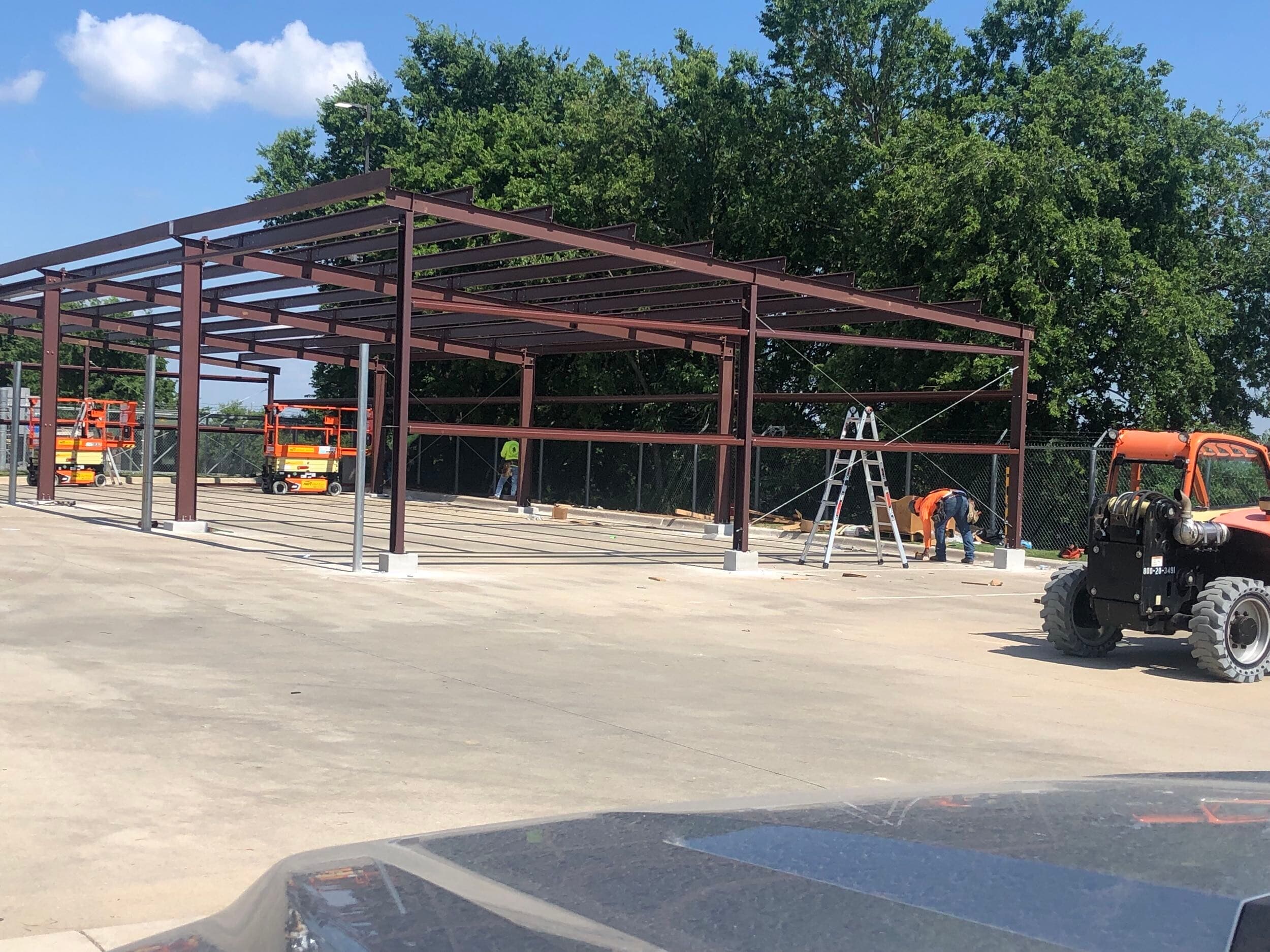
Building an RV and boat storage facility costs $5 to $10 per square foot for open parking, $18 to $35 per square foot for covered canopy storage, and $45 to $80 per square foot for fully enclosed units in 2026. In East Texas lake country, those spaces rent for $75 to $125 per month open, $150 to $250 covered, and $250 to $450 enclosed — a spread that makes RV and boat storage one of the strongest return-on-cost plays in commercial real estate, with construction timelines of just 4 to 8 months.
How Much Does It Cost to Build RV and Boat Storage Per Square Foot?
RV storage is really three products at three price points, and the best facilities mix all three:
- Open lot storage: $5 - $10 per square foot. Engineered surface, striping, lighting, perimeter fencing, and gated access. The cheapest space to build and the fastest to lease, though at the lowest rents.
- Covered canopy storage: $18 - $35 per square foot. Pre-engineered steel canopies, typically 12 to 14 feet of clear height, open on the sides with enclosed backs optional. This is the workhorse of the category — Texas sun and hail are exactly what owners of $150,000 motorhomes and $80,000 wake boats are paying to avoid. Our covered storage construction page covers the building systems we use.
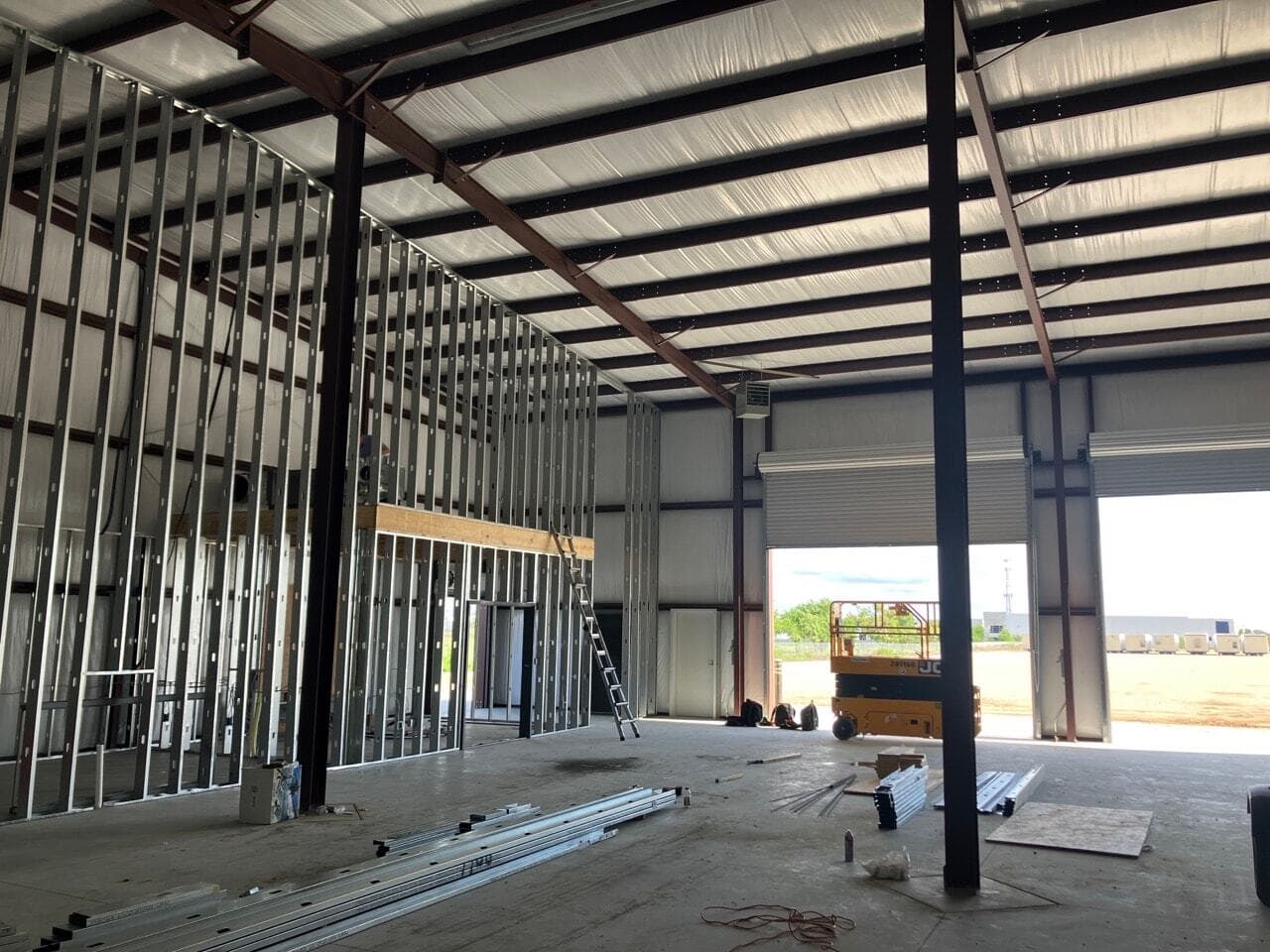
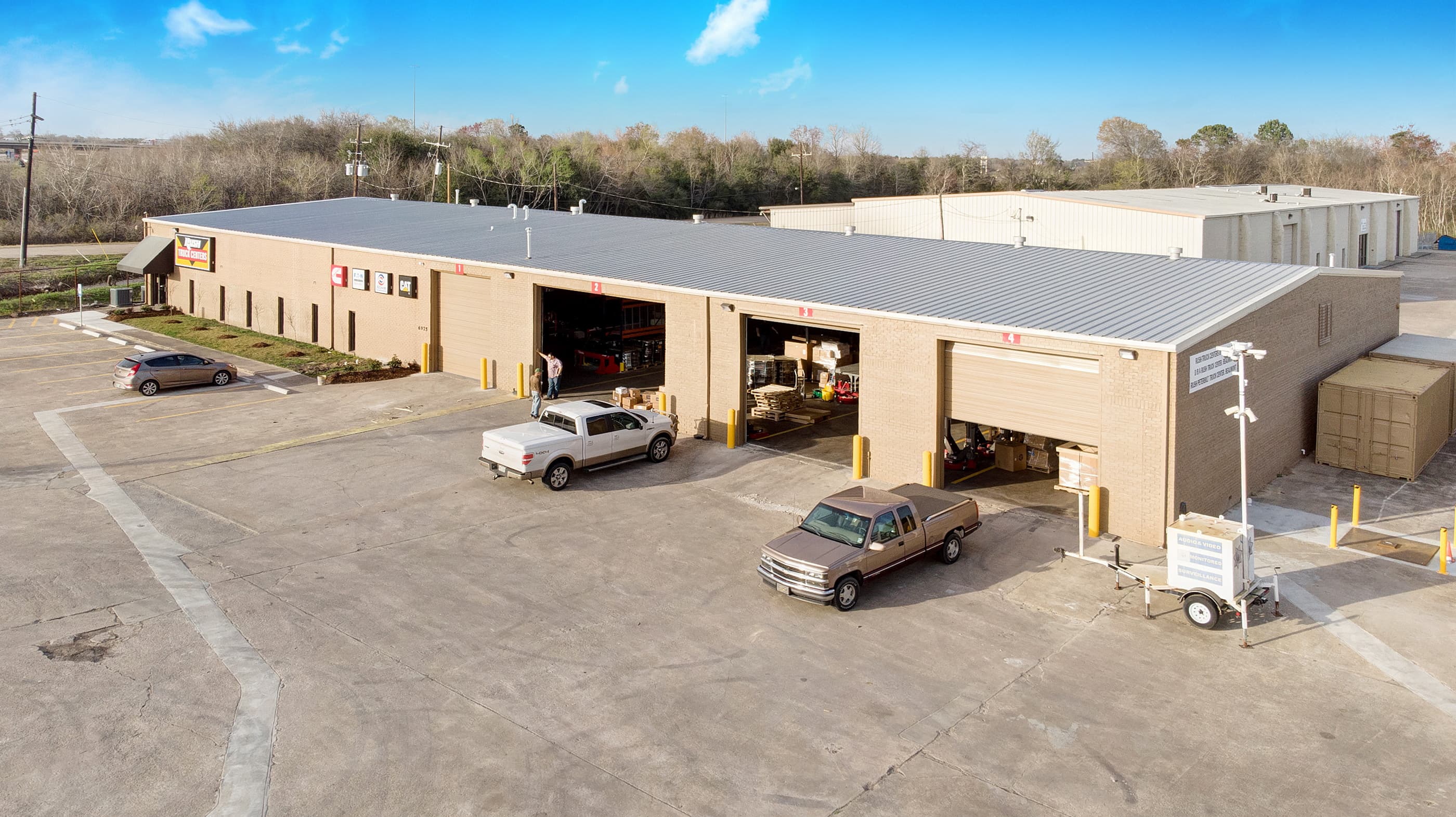
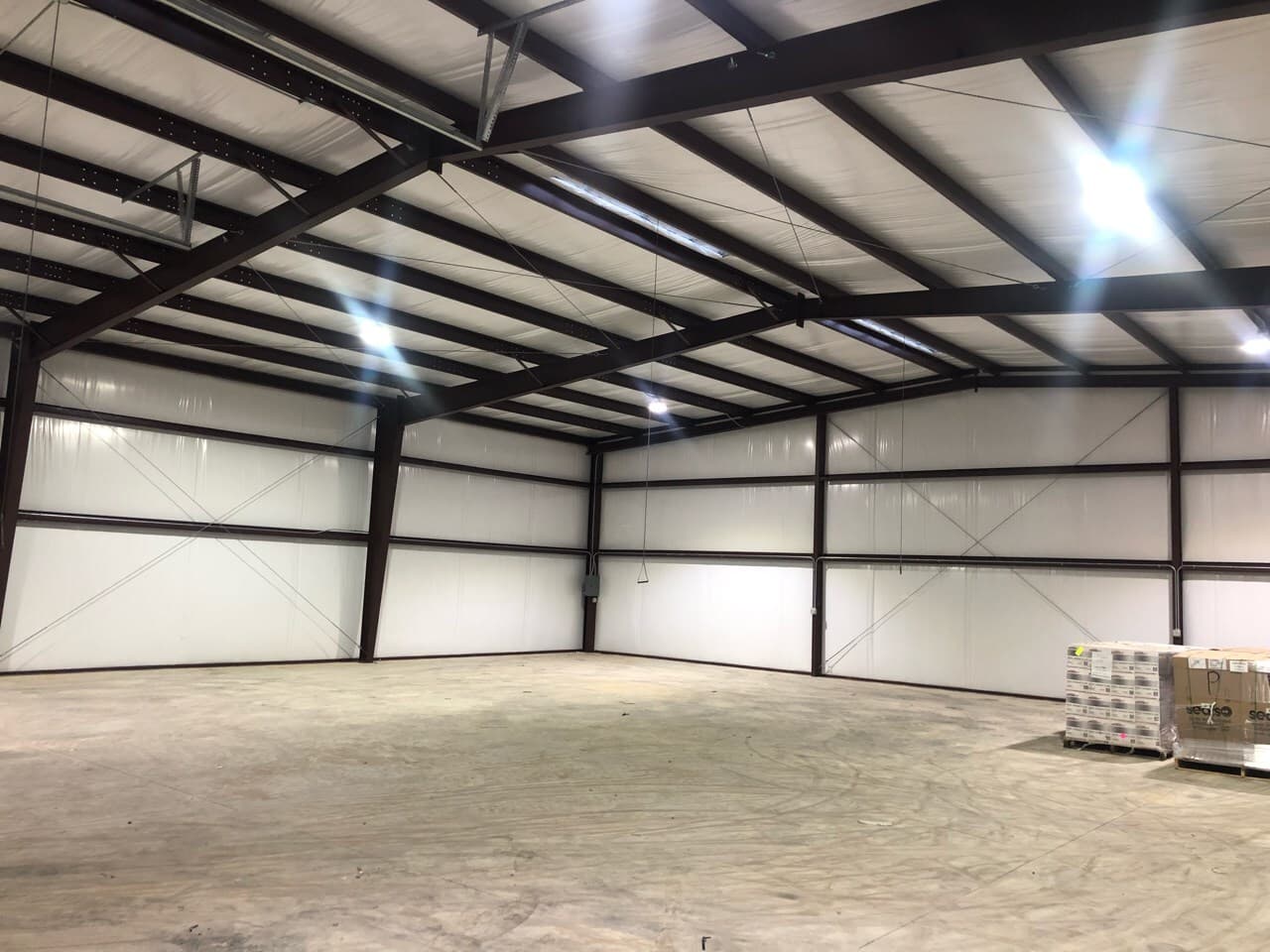
- Fully enclosed units: $45 - $80 per square foot. Metal buildings divided into individual drive-in bays with roll-up doors, often 14-foot doors and 16-foot eaves for Class A motorhomes. Add power, and premium tenants will pay for trickle chargers and interior lighting.
On a per-space basis: a 12x35 open space costs roughly $2,100 to $4,200 to build; a 12x40 covered space $8,600 to $16,800; a 14x45 enclosed unit $28,000 to $50,000. Those numbers are the foundation of the ROI math below.
What Unit Sizes Do RV and Boat Storage Tenants Want?
Sizing mistakes are permanent, so get the mix right on paper. The East Texas demand profile runs from 12x30 spaces for bass boats and travel trailers up to 14x50 units for Class A diesel pushers with tow vehicles. A proven starting mix: roughly 40% at 12x30-12x35, 35% at 12x40-13x45, and 25% at 14x45-14x50. Enclosed buildings need 14-foot-wide by 14-foot-tall roll-up doors at minimum for the large-unit rows, and drive aisles of 60 to 65 feet so a 45-foot coach can swing into its bay in one pass. Skimping aisle width to squeeze in one more row is the classic first-time developer error — tenants who scrape a fender do not renew.
Gravel, Asphalt, or Concrete: What Should the Site Surface Be?
Surface selection is the biggest single cost lever on the project:
- Engineered gravel: $2 - $4 per square foot. Compacted base over geotextile fabric. Acceptable for open storage in rural counties, but generates dust, ruts under 30,000-pound coaches, and reads as budget-tier in marketing photos.
- Asphalt: $5 - $8 per square foot. Smooth, clean, and mid-market. Plan on sealcoating every 3-5 years, and specify heavier sections at turn radii where power steering under load shoves the mat.
- Concrete: $8 - $13 per square foot. The premium choice, and effectively mandatory inside enclosed buildings and under canopies where jacks and landing gear point-load the slab. East Texas red clay moves; a properly engineered slab with select fill or piers at building lines adds cost but prevents the cracked-slab callbacks that plague cheap builds.
A practical hybrid that we price often: concrete under roofs, asphalt drive aisles, and gravel in a low-rate open section — it can trim 20% or more off site paving without hurting the leasing story.
What Do Security and Access Control Cost?
Tenants are storing six-figure toys; security is the product as much as the roof is. A competitive package includes an 8-foot perimeter fence, a keypad or app-controlled sliding gate, LED site lighting, and camera coverage at the gate and drive aisles. Budget $25 to $45 per linear foot for commercial-grade fencing, $8,000 to $20,000 for an automated gate operator system with access control software, and $10,000 to $30,000 for cameras and lighting depending on site size. Our commercial fencing and gate construction team builds these systems as part of the site package, and our guide to commercial fencing and security gates in Texas covers the options in depth.
What Site Work and Drainage Should You Budget For?
Storage sites are big roofs and big pavement, which means stormwater. Once impervious cover crosses local thresholds, expect detention requirements — a graded pond, outlet structure, and drainage engineering typically add $50,000 to $150,000 on a 3-5 acre site. Add earthwork ($3-$8 per cubic yard moved), utility extensions, and an entrance culvert or TxDOT driveway permit if you front a state highway. All-in site development beyond paving commonly runs $150,000 to $400,000 on a raw East Texas tract. Sites with existing grade falling gently toward a legal discharge point save real money — we flag that in the first site walk.
What Rents Can RV and Boat Storage Charge in East Texas?
Current East Texas market rents by product type: open spaces $75 to $125 per month, covered spaces $150 to $250, and enclosed units $250 to $450 depending on size and power. The demand engine is lake country. Cedar Creek Lake, Lake Fork, and Lake Tawakoni together put tens of thousands of registered boats within a 45-minute tow of the Canton area, and HOA restrictions in the DFW suburbs push RV owners east along I-20 looking for storage every spring. Facilities near the I-20/Highway 19 crossroads also capture traffic from First Monday Trade Days, which draws more than 100,000 visitors monthly — many towing something.
What ROI Can You Expect From an RV Storage Facility?
Run the math on a representative 4-acre mixed facility: 60 open spaces, 50 covered, and 20 enclosed. Construction cost lands roughly at $1.3M to $1.9M including site work, fencing, and gates. At stabilized occupancy of 90% and mid-range rents, gross revenue runs about $360,000 to $420,000 per year. Operating expenses on RV storage are famously thin — 25-35% of revenue, versus 35-45% for climate-controlled self storage — because there is no HVAC, minimal staffing, and remote gate management. That pencils to a 12-18% unlevered yield on cost for well-located East Texas sites, with lease-up to stabilization typically taking 12 to 24 months. The economics rhyme with traditional self storage, which we covered in our self-storage facility construction guide, but with lower build cost per rented dollar.
Should You Build in Phases?
Yes, in most cases. The smart sequence: grade and fence the entire site, build the gate and office infrastructure once, then construct Phase 1 as open and covered spaces — the cheapest, fastest-leasing product. Bank the lease-up, then add enclosed buildings in Phase 2 on pads you already graded, funded partly by Phase 1 cash flow. Phasing cuts initial capital 30-40%, lets real demand data drive the Phase 2 unit mix, and keeps you from carrying $50,000 enclosed units through a slow lease-up. The one thing not to phase is the civil engineering — design detention and utilities for full build-out on day one, or Phase 2 will require tearing up Phase 1.
What Mistakes Do First-Time Storage Developers Make?
We see the same handful of errors sink otherwise good projects, and every one of them is avoidable on paper:
- Undersized drive aisles and doors. A 12-foot door on a 14-foot-tall coach is a vacancy, permanently. Design for the largest 25% of the market, not the average rig.
- Skipping the drainage engineering. A site that sheds water onto a neighbor or a county road becomes a compliance problem after the first spring storm, and retrofit detention costs two to three times what designed-in detention does.
- Building 100% enclosed on day one. Enclosed units carry the highest cost per space and the slowest lease-up. Let covered and open product carry the early months.
- Cheap gates and fencing. The gate is the one component every tenant touches twice per visit. A jammed gate operator on a Friday afternoon in June generates more move-outs than any rent increase.
- Ignoring power at premium units. A 20-amp outlet per enclosed bay costs a few hundred dollars during construction and supports a $40-$75 monthly rent premium for battery maintainers and onboard fridges.
How Long Does RV Storage Construction Take?
From notice to proceed, a single-phase facility takes 4 to 8 months: 4-6 weeks of dirt work and drainage, 3-4 weeks of paving, and 8-16 weeks of canopy and building erection depending on steel lead times, with fencing and gates running concurrently. Permitting in rural Van Zandt, Henderson, and Rains County jurisdictions is measured in weeks, not the 12+ week cycles common in DFW suburbs — one more reason the east side of the metroplex pencils better. See our completed covered storage project in Ardmore for what a finished canopy facility looks like.
SYB Builders builds covered and enclosed storage throughout Canton, Van Zandt County, and the wider East Texas region, from single covered structures to multi-building facilities with full site utilities and access drives.
Get a Free Estimate on Your Storage Facility
SYB Builders is a licensed commercial general contractor based in Canton, Texas with 45+ years of experience building covered storage, metal buildings, paving, and security fencing across East Texas and DFW. We can take your tract from raw dirt to leased-up facility — engineering, site work, steel, and gates under one contract. Send us your site and target unit mix for a free estimate, or call (903) 560-8330 and we will talk through the phasing plan that fits your capital.