The commercial construction process works through ten sequential steps — site selection, design development, permitting, site preparation, foundation construction, structural framing, MEP systems installation, interior finishes, inspections, and certificate of occupancy — with each phase building on the previous one over a timeline of 6 to 18 months depending on project size and complexity. SYB Builders manages this entire process for clients across East Texas and the DFW metroplex.
Step 1: Site Selection and Feasibility in East Texas
Every commercial construction project begins with choosing the right location. Site selection involves evaluating multiple properties against your business requirements, budget constraints, and long-term growth plans. Key factors in the East Texas market include proximity to your customer base and employee pool, access to major transportation routes like I-20, Highway 19, and Loop 323, zoning compatibility with your intended use, utility availability including water, sewer, electricity, and gas, soil conditions and topography, and cost of land compared to your overall project budget.
SYB Builders assists clients with site feasibility analysis during this phase, identifying potential construction challenges before you commit to purchasing land. A thorough site evaluation can save tens of thousands of dollars by identifying drainage issues, soil problems, or utility deficiencies before they become construction change orders.
Timeline: 2-8 weeks. What to expect: Multiple site visits, preliminary cost estimates for each site, and a recommendation based on total project cost — not just land price.
Step 2: Design Development for Your Canton TX or East Texas Project
Once a site is selected, the design phase translates your business needs into construction documents. This phase involves working with an architect and your general contractor to develop floor plans, exterior elevations, structural systems, and building specifications. For East Texas commercial projects, design decisions should account for local building codes and zoning requirements, soil conditions that affect foundation design, the Texas climate — particularly heat, humidity, and occasional severe weather, and energy efficiency strategies appropriate for East Texas utility rates.
SYB Builders recommends involving your general contractor early in the design phase. This design-assist approach allows us to provide real-time cost feedback on design decisions, preventing expensive redesigns later. Our experience with ground-up commercial construction means we can guide design choices that optimize cost and constructability.
Timeline: 4-12 weeks. What to expect: Regular design meetings, progressive cost estimates as design develops, and construction documents ready for permit submission.
Step 3: Permits and Approvals Across East Texas Municipalities
With completed construction documents, the next step is obtaining all required permits and approvals. In East Texas, this process varies significantly by municipality. Canton processes commercial permits in 2-4 weeks, while Tyler takes 4-8 weeks and Dallas can take 6-12 weeks or longer. The permitting phase includes submitting construction drawings and site plans to the local building department, paying permit fees based on project valuation, responding to plan review comments and resubmitting if needed, and obtaining separate permits for mechanical, electrical, plumbing, and fire protection work.
SYB Builders' construction project management services include complete permitting coordination. We submit applications, respond to plan review comments, and schedule all required inspections — so you do not have to navigate the bureaucracy yourself.
Timeline: 2-12 weeks depending on municipality. What to expect: Possible plan review comments requiring design modifications, fee payments, and approval letters.
Step 4: Site Preparation and Earthwork
Once permits are in hand, construction begins with site preparation. This phase transforms raw land into a construction-ready pad. East Texas site preparation typically involves clearing and grubbing (removing trees, brush, and topsoil), rough grading to establish building pad elevation and drainage patterns, utility trenching for water, sewer, electrical, and gas connections, erosion and stormwater controls as required by permits, and compaction of subgrade soils to support the foundation.
East Texas clay soils require careful moisture management during this phase. Over-wet or over-dry conditions can prevent proper compaction and lead to foundation problems later. SYB Builders monitors soil moisture content during earthwork and adjusts the schedule to achieve optimal compaction conditions.
Timeline: 2-6 weeks. What to expect: Heavy equipment on site, dust or mud depending on weather, and possible weather-related delays during spring rainy season.
Step 5: Foundation Construction in East Texas
The foundation is the most critical structural element of your commercial building. In East Texas, foundation design must account for the region's expansive clay soils that can cause dramatic movement between wet and dry seasons. Common commercial foundation types include slab-on-grade with moisture barriers and reinforcement for lighter buildings, post-tensioned slabs using steel cables to resist soil movement for moderate loads, and drilled pier foundations extending through expansive soils to stable bearing strata for heavy buildings.
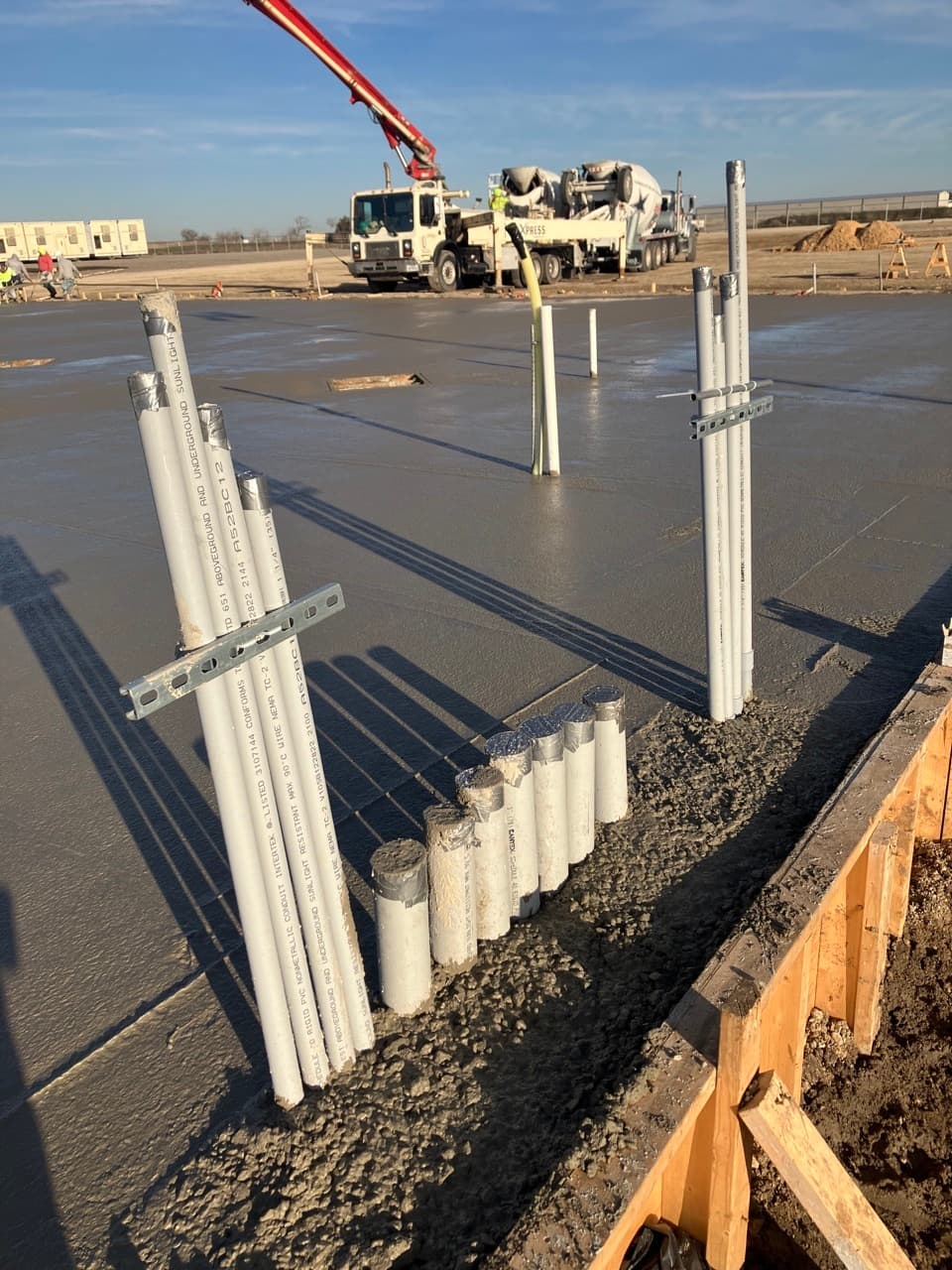
The foundation phase includes forming, placing reinforcement, pouring concrete, and curing. Each step requires inspection by the local building department before proceeding.
Timeline: 2-6 weeks. What to expect: Geotechnical testing, forming and rebar installation, concrete pours (weather dependent), and foundation inspection.
Step 6: Structural Framing and Building Shell
With the foundation complete, the building takes shape during the framing phase. For metal buildings — the most common commercial construction type in East Texas — this involves erecting pre-engineered steel frames, installing purlins and girts, attaching wall and roof panels, and installing overhead doors and window openings. For traditional construction, framing involves erecting steel columns and beams or constructing masonry walls, installing floor and roof decking, and applying exterior finishes.
This is the most visible phase of construction, when the building goes from a flat slab to a recognizable structure. SYB Builders coordinates structural erection crews with strict attention to safety protocols and quality standards.
Timeline: 3-10 weeks depending on building size and type. What to expect: Rapid visible progress, crane operations, and structural inspections.
Step 7: MEP Systems — Mechanical, Electrical, and Plumbing
The MEP phase installs the systems that make the building functional. This phase runs concurrently with and immediately following framing, and includes HVAC ductwork, equipment, and controls, electrical wiring, panels, lighting, and data infrastructure, plumbing supply and waste piping, restroom fixtures, fire sprinkler and fire alarm systems, and specialty systems such as compressed air, medical gas, or dust collection.
MEP coordination is one of the most complex aspects of commercial construction. Multiple trades must work in the same spaces without conflicting, and all work must pass code inspections. SYB Builders manages subcontractor scheduling to prevent conflicts and keep the project moving forward efficiently.
Timeline: 4-10 weeks. What to expect: Multiple subcontractor crews working simultaneously, MEP rough-in inspections, and coordination meetings.
Step 8: Interior Finishes for Your East Texas Commercial Space
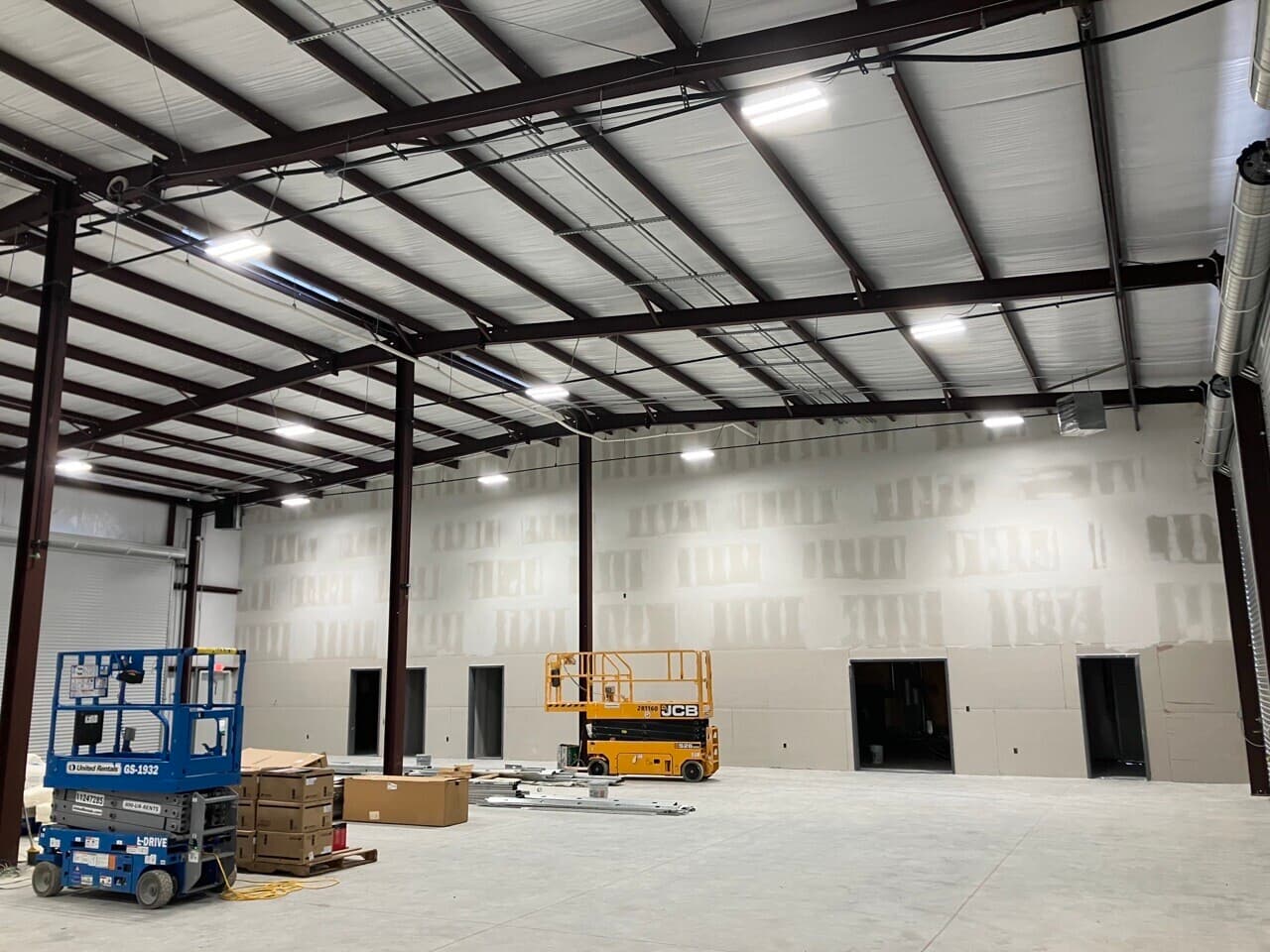
Once MEP rough-in passes inspection, interior finishes transform the construction site into a finished commercial space. Interior finish work includes drywall installation, taping, and painting, flooring installation — tile, polished concrete, carpet, or specialty flooring, ceiling systems including acoustic tile, drywall, or exposed structure, cabinetry, countertops, and millwork, and door and hardware installation.
This phase requires careful sequencing to prevent damage to finished surfaces. SYB Builders schedules finish work in a logical progression — ceilings before walls, walls before floors — and protects completed work as subsequent trades move through the space.
Timeline: 3-8 weeks. What to expect: Dramatic visual transformation, finish selection decisions, and owner walkthroughs to review quality.
Step 9: Final Inspections and Punch List
Before a commercial building can be occupied, it must pass final inspections from the local building department. Final inspections verify that all building systems are installed correctly and meet code, all fire protection and life safety systems are operational, accessibility requirements are met, the site — including parking, landscaping, and drainage — is complete, and all previously identified inspection items have been corrected.
Simultaneously, SYB Builders conducts an internal punch list inspection to identify and correct any items that do not meet our quality standards or the contract specifications. We walk the project with the owner to create a mutual punch list and complete all items before requesting the final inspection.
Timeline: 1-3 weeks. What to expect: Detailed inspection process, minor corrections and touch-ups, and confirmation that the building is ready for occupancy.
Step 10: Certificate of Occupancy and Project Closeout in Canton TX and Beyond
The certificate of occupancy (CO) is the document issued by the local building department that legally authorizes you to occupy and use your new commercial building. Obtaining the CO marks the official completion of the construction process. Project closeout also includes turning over operation and maintenance manuals for all building systems, providing warranty documentation for equipment and materials, delivering as-built drawings showing the building as actually constructed, releasing final retainage payments, and transitioning the building to the owner's maintenance team.
SYB Builders provides a comprehensive closeout package for every project, ensuring that you have all the documentation needed to operate and maintain your building for years to come. Our warranty support continues after closeout, with responsive service for any issues that arise during the warranty period.
Timeline: 1-2 weeks. What to expect: Final paperwork, key handover, and celebration of your new commercial space.
Start Your Commercial Construction Process with SYB Builders
Understanding the commercial construction process reduces uncertainty and helps you plan your business timeline accordingly. SYB Builders guides clients through every step — from initial site evaluation through certificate of occupancy and beyond. Our Canton TX headquarters at 611 N Trade Days Blvd serves as home base for commercial construction projects across East Texas and the DFW metroplex. Call (903) 560-8330 to start your project today.